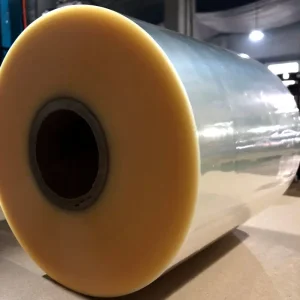
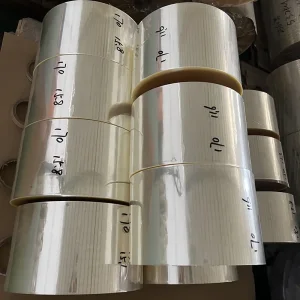
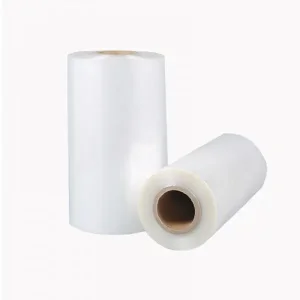
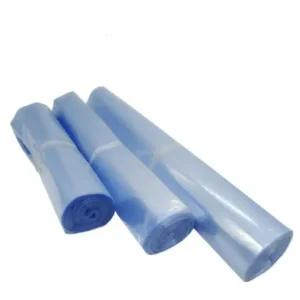
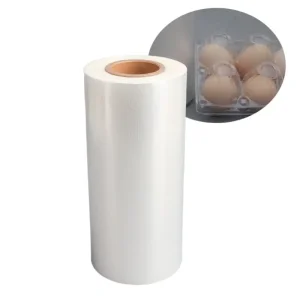
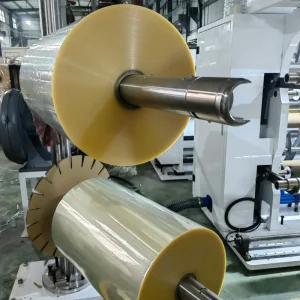
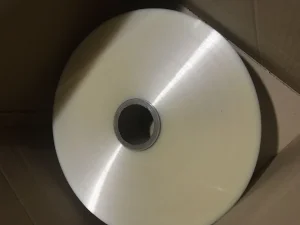
Explore our specialized range of high-performance PVC, PE, and POF shrink films optimized for industrial packaging lines, automatic labeling machinery, and commercial distribution.
An authoritative analysis of polymer formulation, production standards, and strategic procurement frameworks for the global packaging industry.
Polyvinyl Chloride (PVC) remains a cornerstone material in the global shrink sleeve packaging industry. This polymer's dominance is driven by its exceptional physical properties: precise, predictable shrink behavior, high clarity, and robust printability. The production of high-performance PVC label film requires a delicate balance of vinyl chloride monomers, heat stabilizers, plasticizers, lubricants, and processing aids. Through advanced extrusion or calendering lines, manufacturers orient the polymer chains along the transverse direction (TD) while keeping the machine direction (MD) orientation to a minimum.
This molecular orientation ensures that when heat is applied during the shrink process (typically through steam or hot air tunnels), the film shrinks tightly around the contours of the container without distorting the printed graphics. Industrial-grade PVC label films generally offer a TD shrink rate ranging from 45% to 65%, depending on the specific profile of the container, while the MD shrink is constrained below 5% to prevent vertical movement or smiling defects on the bottle shoulders.
| Performance Metric | Typical Value Range | Testing Standard | Industrial Application Significance |
|---|---|---|---|
| Transverse Direction (TD) Shrinkage | 45% - 68% | ASTM D2732 | Ensures tight wrapping around irregular and complex container shapes. |
| Machine Direction (MD) Shrinkage | 1% - 5% | ASTM D2732 | Prevents vertical distortion of graphics and maintains label height. |
| Tensile Strength | > 45 MPa | ASTM D882 | Ensures high-speed processing without web breaks in automatic applicators. |
| Haze Value | < 3.5% | ASTM D1003 | Delivers glass-like clarity, highlighting container and product aesthetics. |
| Coefficient of Friction (COF) | 0.20 - 0.35 | ASTM D1894 | Optimizes film feed speeds and bottle movement through conveyor belts. |
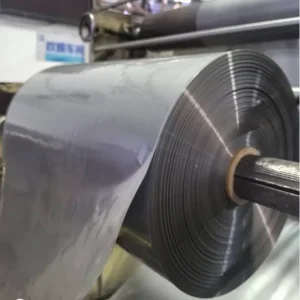
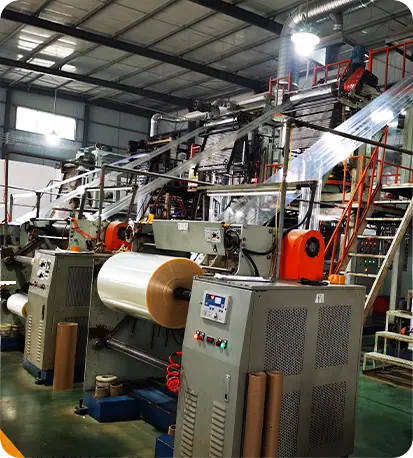
The manufacturing process determines the quality, gauge uniformity, and final print consistency of the PVC label film. Two main processes dominate: Calendering and Blown Film Extrusion. Calendering involves feeding heated, plasticized PVC through multiple counter-rotating, high-precision rollers. This process yields films with exceptional gauge consistency and surface flateness, making calendered film the preferred choice for high-speed gravure and flexographic printing presses where registration accuracy is critical.
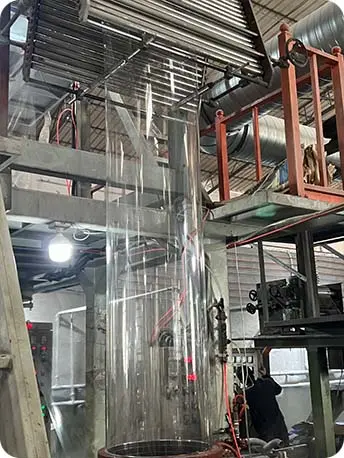
On the other hand, blown film extrusion involves extruding a polymer melt through a circular die, blowing it into a bubble, and then drawing it upward. While this method requires lower initial capital expenditure and allows for thinner gauges, it often exhibits higher variations in thickness. Top-tier PVC label film suppliers invest heavily in automatic thickness profile measurement systems. These systems monitor the cross-direction profile in real-time, feeding adjustment commands to automatic die bolts to maintain tight gauge tolerances, often within ±3%.
How localized supply chains, advanced technology integration, and cost efficiencies drive value for international purchasers.
Chinese factories are located within massive chemical manufacturing clusters. This proximity ensures immediate access to raw PVC resin, stabilizers, and specialized ink formulations. Consequently, it minimizes domestic logistics costs and shortens lead times, even for custom orders.
By using modern, automated extrusion equipment featuring computerized thickness scanners and tension controllers, Chinese manufacturers maintain high consistency. They deliver low-gauge tolerances and uniform shrink performance across bulk runs.
Leading Chinese exporters support extensive customization, developing tailor-made shrink curves for non-standard bottle shapes. They also offer surface treatments (like high corona levels) to maximize ink adhesion during high-speed printing.
Decades of experience in polymer material manufacturing, processing innovation, and reliable distribution systems.
Your One-Stop Packaging Material Procurement Platform.
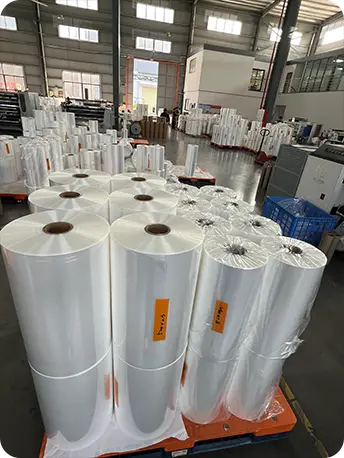
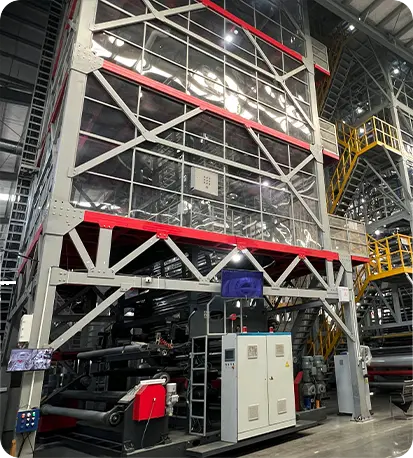
Zhongshan Tianchen New Materials Co., Ltd. is a comprehensive procurement platform built on over 20 years of experience in the film packaging industry. We address complex sourcing challenges by integrating high-quality raw materials with advanced manufacturing capabilities.
Our platform handles everything from eco-friendly shrink films to high-performance PVC label films. Our professional R&D team works closely with quality control specialists to verify that every batch meets rigorous international standards, including RoHS, REACH, and FDA specifications for food contact packaging.
We work to simplify supply chains, reduce production downtime, and lower procurement costs for cosmetic manufacturers, beverage brands, and print shops worldwide.
Global procurement teams must balance unit costs, material behavior on high-speed lines, and compliance with local regulations. Historically, PVC label films have been popular in North America, South America, and Southeast Asia due to their wide process window. This broad range makes PVC forgiving to apply: it shrinks predictably in both low-temperature steam tunnels and high-temperature electrical tunnels, reducing defects even when heat distribution is uneven.
However, importing materials requires strict attention to logistics and storage. Because of PVC's thermal sensitivity, bulk shipments through tropical zones can suffer from premature shrinkage if temperatures exceed 40°C. Therefore, experienced exporters ship these materials in temperature-controlled reefer containers or use heat-reflective thermal blankets. They also schedule shipments to avoid prolonged port storage during summer months, ensuring the film arrives with its physical properties intact.
Our PVC label films are formulated to meet the challenges of various packaging formats:
Technical guidance and commercial insights from our R&D engineering and global logistics teams.
Browse our complete list of technical materials, including polyolefin shrink films, high-barrier laminates, and specialized heat seal films for demanding packaging applications.
 Tianchen Materials