 Tianchen Materials
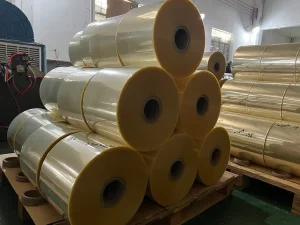
Industrial Guide: Understanding Eco-PVC in Modern Manufacturing
An authoritative exploration of environmental PVC variations, compliance protocols, and technological shifts within global supply chains.
What is Eco-PVC? Structural & Chemical Definition
In modern industrial applications, Polyvinyl Chloride (PVC) remains a dominant material due to its outstanding mechanical strength, chemical resistance, and cost-efficiency. However, standard PVC historically utilized heavy-metal stabilizers (such as lead) and phthalate plasticizers (such as DEHP), which posed significant ecological and health challenges. **Eco-PVC** refers to a redesigned class of polyvinyl chloride compounds engineered specifically to mitigate these ecological impacts while preserving the baseline physical performance of the polymer.
Key chemical adaptations include the substitution of phthalates with bio-attributed or non-toxic plasticizers (like DINCH or Citrofol) and replacing toxic stabilizers with Calcium-Zinc (Ca-Zn) matrices. Furthermore, Eco-PVC increasingly utilizes bio-based raw materials, leveraging ethylene derived from agricultural by-products rather than fossil-fuel extraction. This results in a material that complies fully with rigorous environmental guidelines while delivering identical thermal shrink profiles, clarity, and barrier integrity required by global packaging standards.
Global Industrial Status & The Green Supply Chain Transition
The global demand for flexible polymer films is undergoing a rapid transition dictated by strict corporate sustainability mandates and government regulations. The European Union's REACH directive, RoHS standards, and California Proposition 65 have effectively banned traditional PVC formulations from retail packaging, consumer electronics, and medical devices. Consequently, procurement directors are turning to certified Eco-PVC manufacturers.
Currently, the market for bio-attributed and eco-compliant PVC is experiencing a Compound Annual Growth Rate (CAGR) of over 6.5%. Major industrial sectors—including fast-moving consumer goods (FMCG), pharmaceuticals, and automotive components—are actively retrofitting their packaging pipelines to accept eco-friendly alternatives. By working directly with factories that specialize in non-phthalate plasticizers and low-temperature shrink ratios, enterprises can dramatically reduce their Scope 3 carbon emissions without sacrificing operational efficiency.
Regulatory Compliance
Fully compliant with REACH, RoHS, and EU Directive 10/2011. Free from heavy metals, lead, and hazardous phthalates.
High Shrink Efficiency
Features adjustable shrink rates and low activation temperatures, ensuring uniform wrapping on irregular shapes.
Resource Efficiency
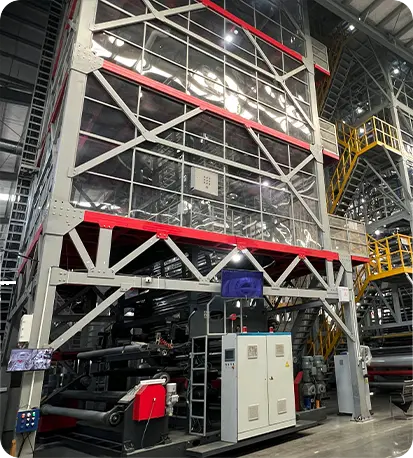
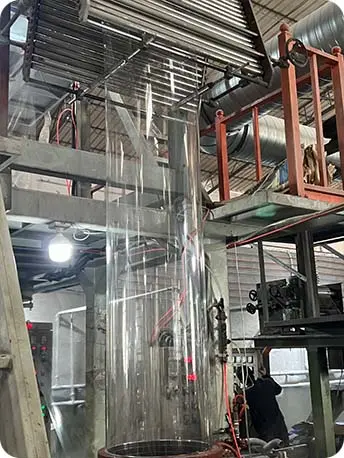
Produced with minimized carbon footprints using modern co-extrusion technology, lowering overall manufacturing energy draw.
China Manufacturing & Factory Efficiency Advantages
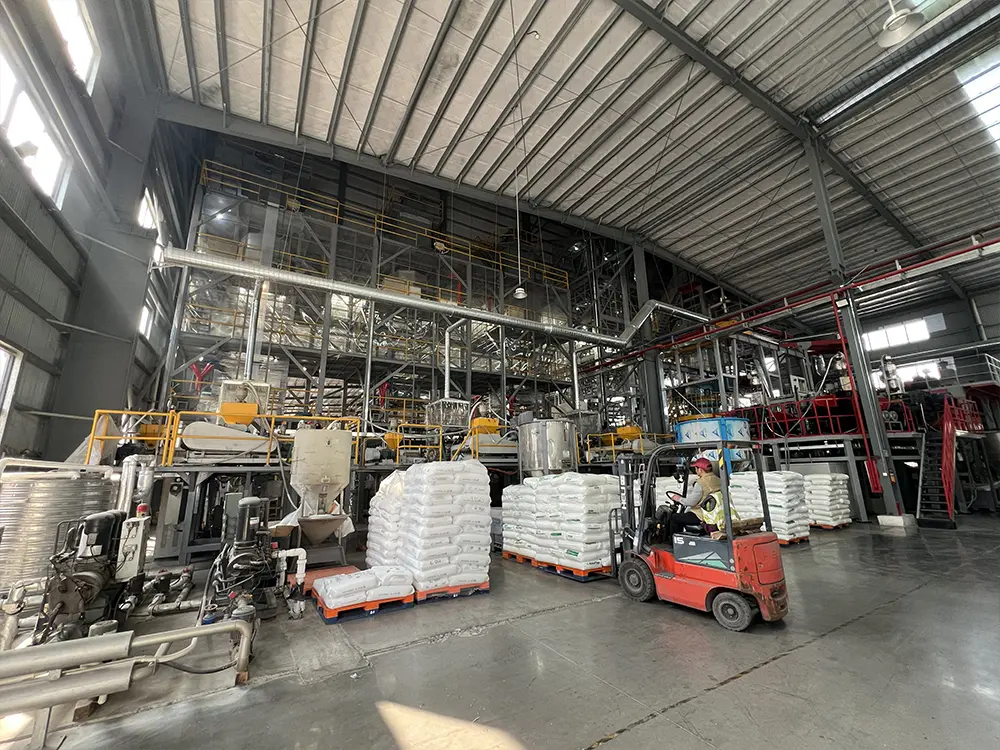
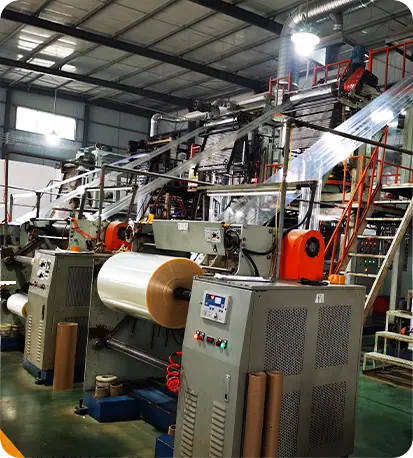
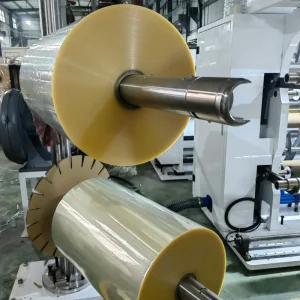
When selecting a wholesale partner for Eco-PVC shrink films, China-based manufacturers offer unmatched advantages in vertical supply chain integration and scaling capacity. China's industrial clusters for polymer science feature state-of-the-art co-extrusion and calendering lines that guarantee thickness uniformity and control deviation to within less than 1.5 microns.
Furthermore, local raw material ecosystems allow rapid adaptation to new non-phthalate plasticizer compounds. This means Chinese factories can offer competitive price points without compromising on high-clarity requirements. With robust local infrastructure, optimized energy structures, and deep integration with global shipping hubs, suppliers in regions like Guangdong can fulfill large-volume contracts with significantly shorter lead times than Western alternatives.
Localized Application Scenarios & Industrial Implementations
- Premium Labeling (Beverage & Spirits): High-shrinkage, UV-resistant Eco-PVC sleeves adapt perfectly to complex container geometries, including contoured glass wine bottles.
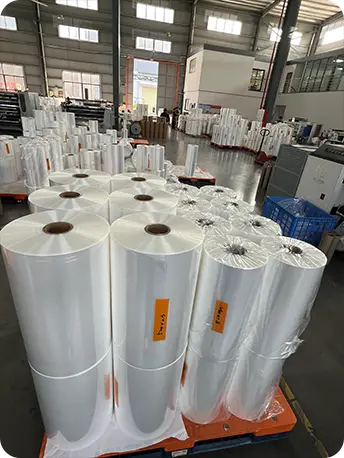
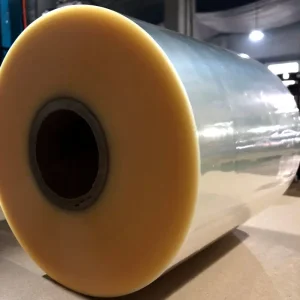
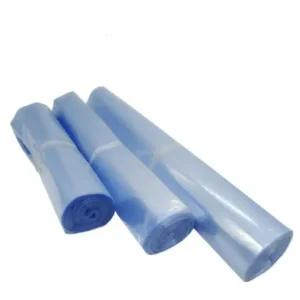
- FMCG and Retail Packaging: Durable transparent shrink bags protect handmade products, cosmetics, and tapes from moisture, dust, and tampering.
- Industrial & Automotive Parts: High-tensile, low-temperature shrink films protect delicate automotive assemblies and metal parts from oxidation and UV degradation during transport.
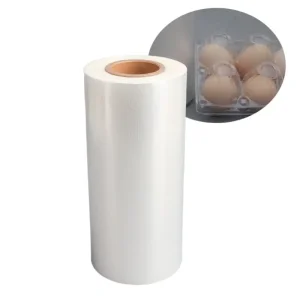
- Food & Agriculture: Specially formulated, breathable micro-perforated films ensure freshness and structural protection for delicate items like eggs and fresh produce.