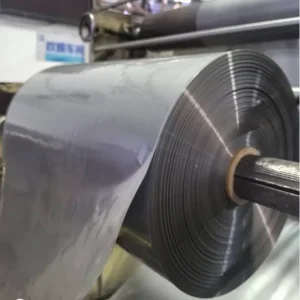
Explore our state-of-the-art polymer formulations custom-tailored for global packaging automated assembly lines.
Mapping the macroeconomics, trade corridors, and production metrics of the worldwide labeling industry.
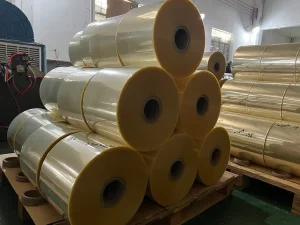
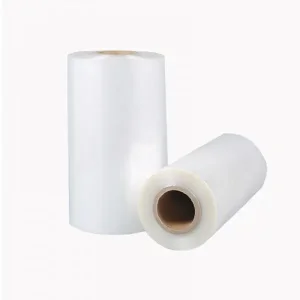
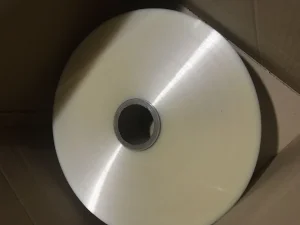
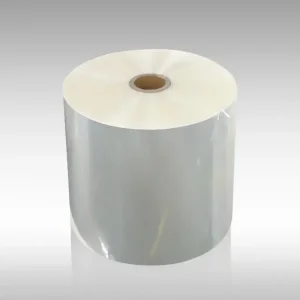
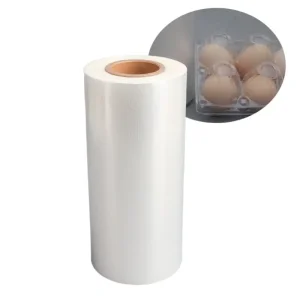
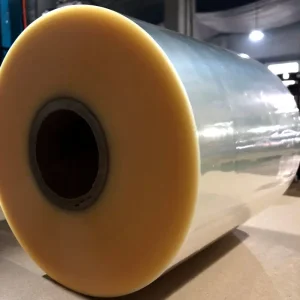
Polyvinyl Chloride (PVC) shrink film label rolls remain a vital component of the global packaging sector. Due to their exceptional optical clarity, stable formulation chemistry, and cost efficiency, they are widely used in Asia-Pacific, North America, and Europe. Rapid urbanization and rising demand for Fast-Moving Consumer Goods (FMCG) have led to increased usage of these films in food, beverage, personal care, and household products.
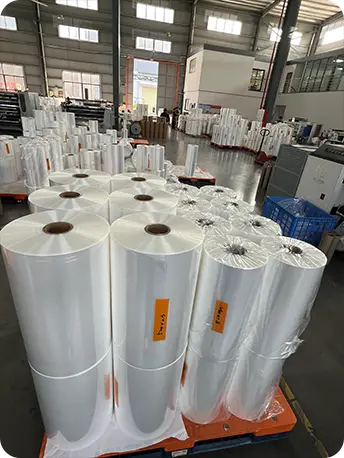
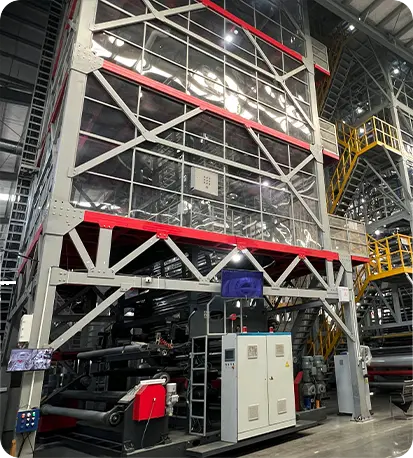
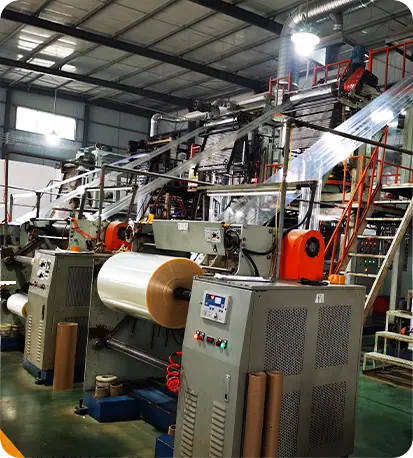
High-capacity factories in Eastern China utilize advanced biaxial orientation equipment to meet strict global tolerances. Modern production operations prioritize longitudinal and transverse tensile strengths. This ensures that when rolls are sent to automated, high-speed applicator systems globally, the film feeds smoothly without tearing, preserving continuous line efficiencies.
Global brands require tailored shrink behaviors. Advanced manufacturers utilize precise chemical ratios, adjusting plasticizer levels to modify Tg (glass transition temperature) properties. This customization allows brands to achieve complex contours on non-standard containers, helping them differentiate their products in competitive retail markets.
Analyzing advancements in sustainable polymers, high-definition printing, and high-efficiency application systems.
The global shrink film label sector is shifting from basic protective packaging to high-performance, intelligent materials. Key trends shaping this transformation include:
By using advanced extrusion systems and online thickness monitoring, leading factories ensure consistent roll profiles, helping brands minimize machine downtime.
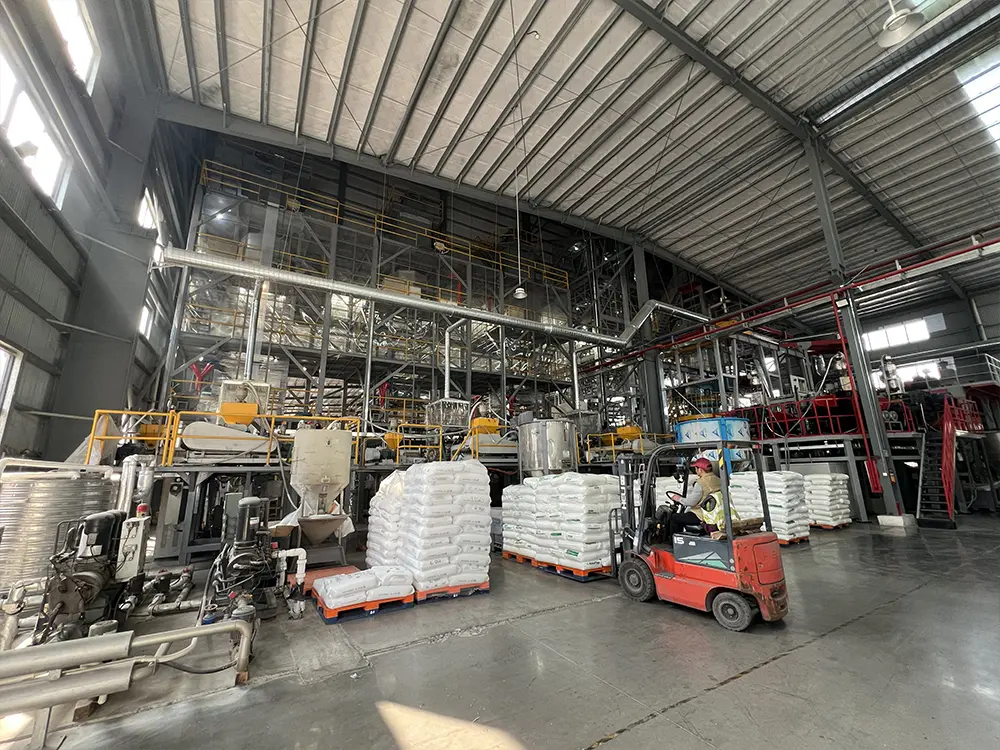
A detailed look at the manufacturing steps required to produce high-performance shrink label rolls.
Premium suspension-grade PVC resin is combined with specialized plasticizers, stabilizers, and slip agents. The formulation is engineered to achieve a target density and glass transition temperature (Tg). The blended materials are then fed into twin-screw extruders for precise processing.
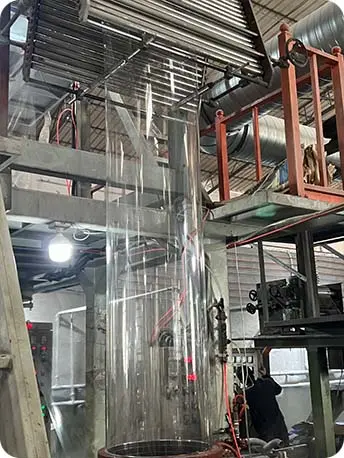
The extruded polymer melt undergoes quick quenching followed by reheating. It is then stretched both longitudinally and transversely. Stretching orientates the molecular chains, locking in latent elastic energy that is released as heat-induced shrinkage during final application.
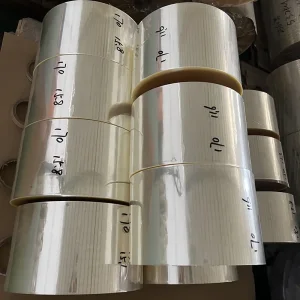
To ensure proper ink adhesion, the film undergoes inline corona discharge treatment, targetting a surface energy level above 38 dynes/cm. High-speed slitting systems then trim the master rolls into precise widths with clean edges to prevent web breaks during printing.
For shrink sleeves, the printed film is folded and seamed using solvent-based bonding agents (typically THF mixtures). Automatic monitoring systems inspect the seam width and bond strength before winding the finished film onto high-density fiber cores.
Customized polymer engineering tailored for specific application environments and container shapes.
Formulated for contoured plastic, glass, and metal containers. Features high transverse direction (TD) shrinkage to ensure a snug fit around bottle necks, with low-temperature initiation to prevent damage to thin-walled PET bottles.
Designed for pharmaceutical and food products. These micro-perforated shrink bands tear predictably when opened, providing clear visual evidence of tampering to protect product integrity and safety.
High-tensile, medium-shrink films designed to hold multiple items securely together. Offers clear visibility for promotional graphics while reducing the need for secondary outer cardboard packaging.
Your One-Stop Packaging Material Procurement Platform built on decades of manufacturing excellence.
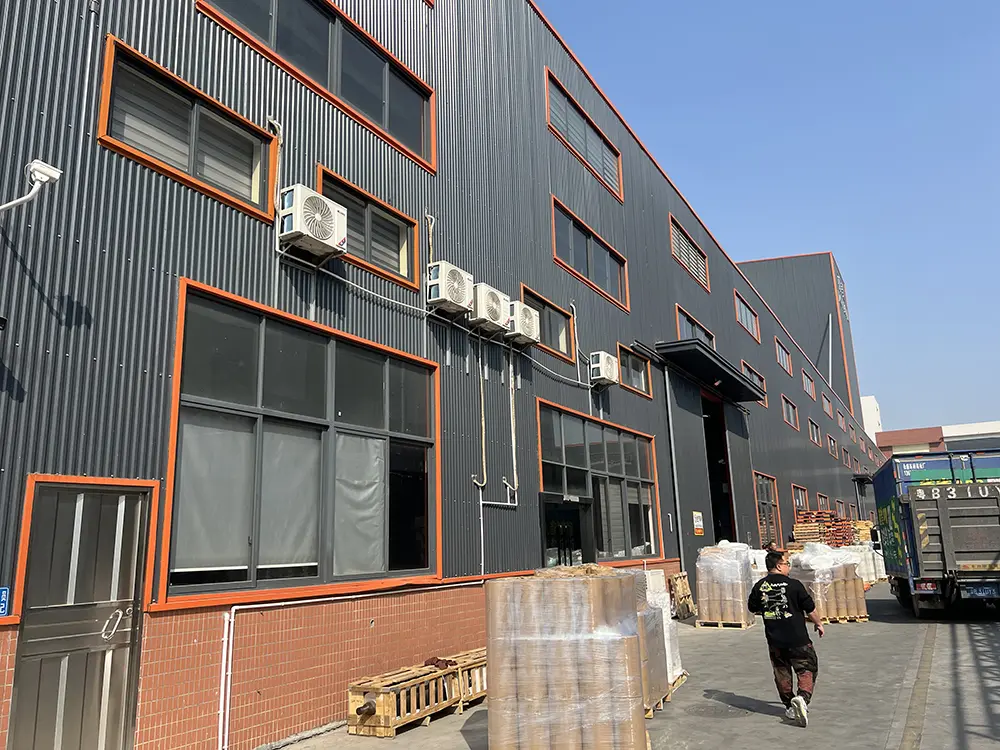
Zhongshan Tianchen New Materials Co., Ltd. is a comprehensive packaging material platform built on more than 20 years of experience in the film packaging industry. We focus on integrating resources and addressing specific customer requirements to deliver optimized solutions for diverse packaging needs.
Our experienced production, R&D, and sales teams maintain strict quality control at every stage. We implement modern QA standards to ensure all products consistently meet specifications. This combination of quality assurance and large-scale manufacturing capacity has made us a trusted partner for global clients.
Our facilities utilize advanced online thickness gauges and automated inspection units to ensure reliable, high-yield production runs.
From polyolefin (POF) and polyethylene (PE) to custom PVC shrink films and printed labels, we supply a complete range of industrial materials.
Technical specifications, application best practices, and material selection guides for procurement managers.
Each polymer serves distinct packaging needs:
Because PVC shrink film is thermally active, it has a recommended shelf-life of 10 to 12 months when stored properly. Store rolls in temperature-controlled warehouses below 25°C (77°F) with relative humidity between 45% and 60%. Keep the rolls in their original protective packaging and store them vertically to prevent flat spots on the film surface.
Thickness variations can cause feed issues, inconsistent cutting, or uneven seams on high-speed applicator lines. Our factories maintain a strict thickness tolerance of ±2% using inline beta-gauge monitors. This consistency ensures smooth web tension and clean cuts, even at application speeds exceeding 400 bottles per minute.
Traditional PVC can pose challenges in standard PET recycling streams because its density is similar to PET, making separation difficult. To address this, we offer thin-gauge films and micro-perforated options that are easy to remove. We also provide alternative materials like PETG or POF to help meet specific regional recycling guidelines.
PVC films have excellent surface energy (typically treated to >38 mN/m) and work well with rotogravure, flexographic, and digital printing. Gravure printing is best for high-volume runs requiring consistent metallic or spot-color details. Flexographic printing is ideal for medium-volume orders, while digital printing is best suited for shorter runs with variable designs.
Factory direct sourcing for diverse shrink wrap configurations, heavy-duty applications, and custom print bases.
 Tianchen Materials