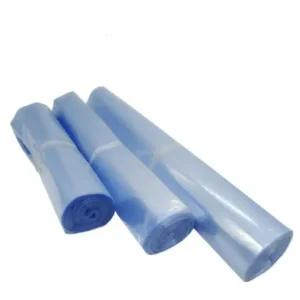
Engineered for high tear resistance, structural integrity, and exceptional optics.
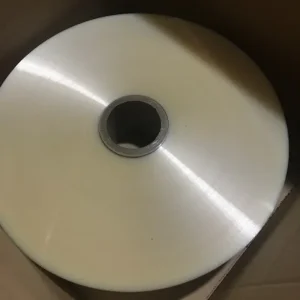
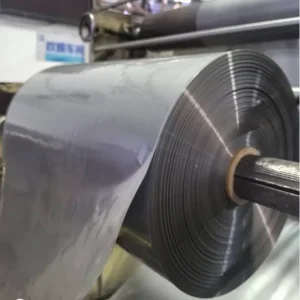
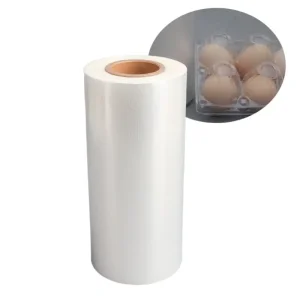
In modern industrial packaging science, crosslink materials represent the pinnacle of structural optimization. Unlike standard linear-polymer resins, which are susceptible to low mechanical shear, premature tearing, and thermal degradation, crosslinked polyolefins (POF) are subjected to intensive physical modification. This modification is achieved via an electron-beam (e-beam) irradiation process.
During the manufacturing extrusion process, the newly extruded multilayer polymer film passes through a high-energy electron accelerator. This beam of accelerated electrons targets the carbon-hydrogen bonds within the polyethylene and polypropylene chains. The physical impact cleaves hydrogen atoms, leaving active carbon free radicals. These radicals immediately bond with adjacent polymer chains to form a covalent carbon-to-carbon bond.
"The resulting three-dimensional macromolecular network transforms the film from a simple thermoplastic material into an elastomeric structure, drastically raising its melting threshold, puncture propagation resistance, and tensile modulus."
For procurement managers and packaging engineers operating globally, choosing a premier wholesale crosslink material wholesaler in China is not merely a cost-reduction strategy. It is an engineering choice to improve packing lines, ensure high slip properties on automated machinery, and guarantee zero-defect transport containment.
Zhongshan Tianchen New Materials Co., Ltd. is a specialized, one-stop packaging material procurement platform built upon more than 20 years of pioneering experience in the film manufacturing and packaging industry. Tianchen operates with a focus on comprehensive polymer development and advanced packaging integration. Our core driver is global resource optimization and customer-centric design, ensuring we provide optimal answers to highly complex, heavy-duty, or food-grade packing challenges.
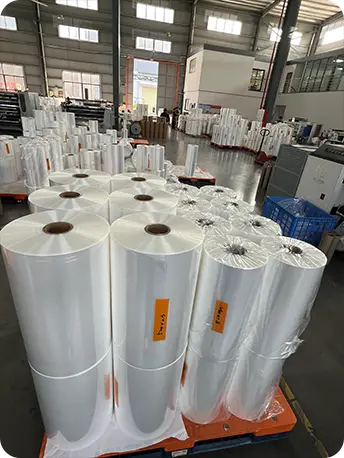
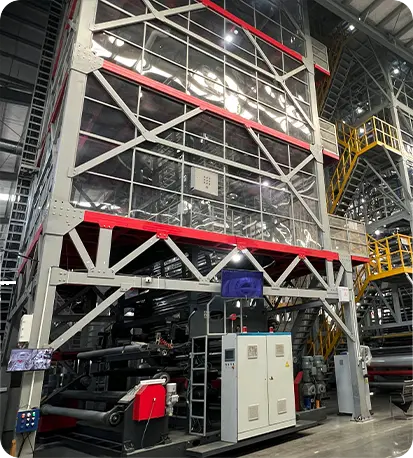
Our operation integrates a professional production, research, development, and sales workforce, allowing us to enforce tight quality control protocols at every stage. We implement modern, data-driven QC systems across all lines to assure international compliance with FDA, RoHS, and REACH criteria. This manufacturing capability, combined with high-volume industrial output, has positioned Tianchen as a preferred partner for global supply chains seeking crosslinked films, eco-friendly barriers, and custom print label substrates.
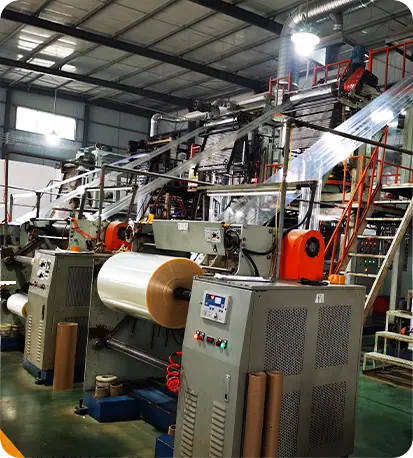
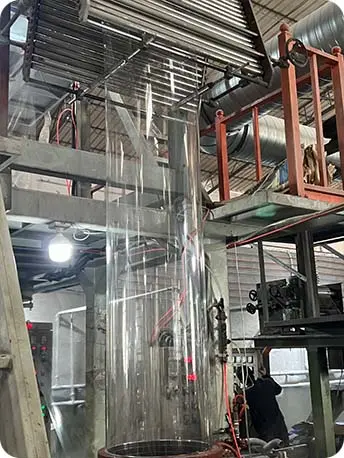
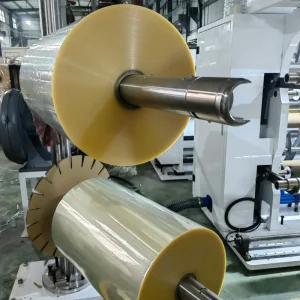
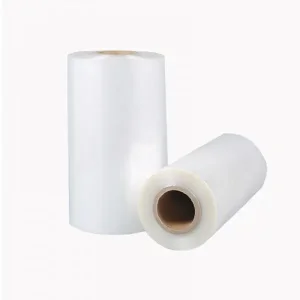
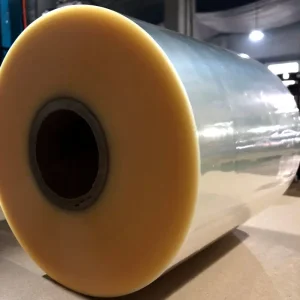
Below are our high-precision film extrusion lines, displaying the clean room manufacturing environments dedicated to zero-haze optical polyolefin output.
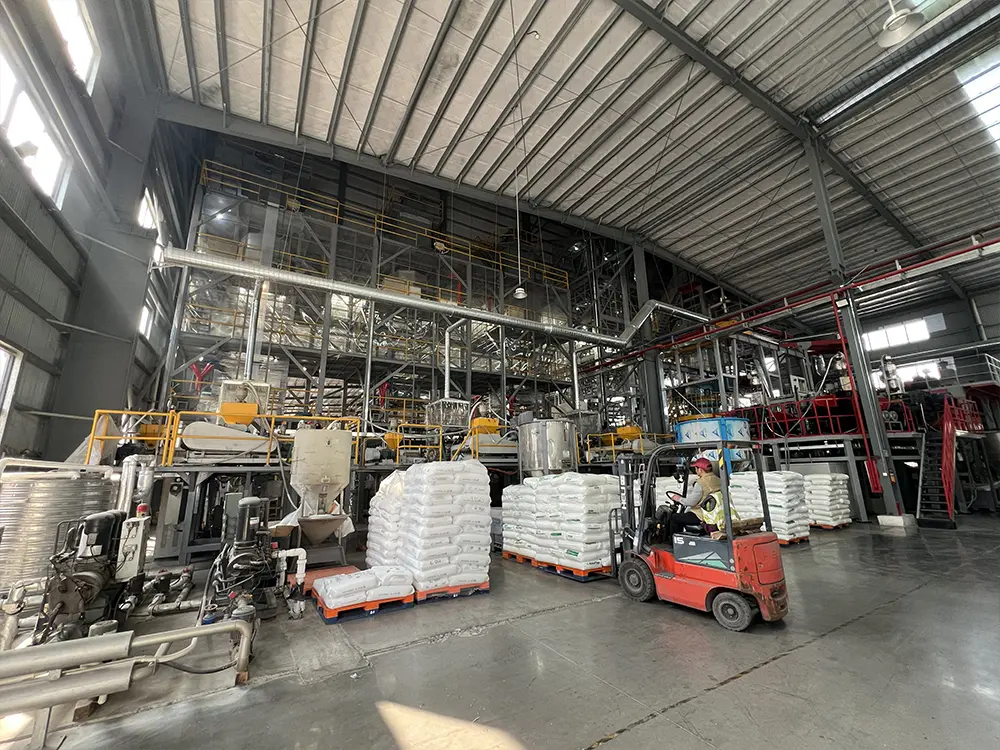
The global demand for high-strength crosslinked polyolefin shrink film is accelerating. According to industrial packaging market surveys, the replacement rate of standard linear low-density polyethylene (LLDPE) and polyvinyl chloride (PVC) by crosslink materials is increasing by 6.8% annually.
In geographic hubs such as the European Union and North America, strict environmental directives and food safety regulations have pushed consumer-facing brands to eliminate PVC packaging. As an alternative, crosslinked POF offers a 100% recyclable, non-toxic, and high-strength option that does not release corrosive hydrochloric acid gas during high-speed hot-wire sealing.
China has moved from low-cost manufacturing to high-tech polymer engineering. Chinese suppliers now utilize advanced electronic irradiation equipment and multi-layer co-extrusion technology. By sourcing from a specialized Chinese manufacturer like Zhongshan Tianchen, global buyers gain a cost structure optimized by raw material integration, while receiving film products that match or exceed Western performance metrics for tensile strength, elongation at break, and optical clarity.
Covalent crosslinking bonds prevent chain slippage under extreme heat and tension.
The production of premium crosslink film requires careful control over polymer selection, extrusion mechanics, and electronic radiation physics. The process is divided into three key steps:
Specialized resins are processed via 5 or 7 extruder heads to form a tubular primary bubble. This co-extrusion allows for the design of functional layers, such as high-slip outer skins and core barrier matrices.
The extruded film is heated to its softening point and stretched simultaneously in both the machine direction (MD) and transverse direction (TD), orienting the polymer molecules to yield high shrink performance.
The oriented film passes through a high-voltage accelerator chamber. Electron bombardment modifies the intermolecular structure, establishing the crosslinked network that prevents tear propagation.
Different global market segments demand tailored formulations of crosslinked films. A leading China manufacturer must provide dynamic options matching specific local applications:
In food processing facilities across Western Europe and the US, high-speed automated flow-wrap machines package products at speeds up to 150 packs per minute. Traditional films can suffer burn-through or seal failures due to the constant heat of the sealing jaws. Crosslink POF offers thermal stability that resists burn-through, even if packaging machines pause briefly. Additionally, its high optical clarity ensures premium retail shelf appeal.
For heavy products such as automotive parts, ceramic goods, or structural bricks, custom heavy-duty PE and crosslinked shrink configurations are required. These films exhibit high puncture propagation resistance. If a sharp corner punctures the film during shipping, the crosslink mesh prevents the tear from spreading, ensuring the unit remains securely bound.
In the global beverage market, complex container designs require shrink labels that adapt to contoured surfaces. Our specialized PVC and POF shrink films are formulated for multi-color rotogravure and flexographic printing, delivering high dimensional stability, control over heat shrinkage, and UV resistance for outdoor product storage.
Sustainability is a core focus for modern packaging manufacturers. The packaging sector is shifting away from thick, complex multi-material composites that are difficult to recycle, moving toward lightweight mono-material solutions.
Zhongshan Tianchen is driving this transition by producing ultra-thin crosslink POF packaging solutions. By utilizing thin 10-micron or 12-micron crosslink configurations instead of standard 19-micron films, global distributors can reduce resin consumption by weight without sacrificing performance. This reduces carbon footprint metrics, transportation costs, and waste disposal fees.
Furthermore, our production incorporates clean technology. The e-beam irradiation process is a physical modification method that requires no chemical crosslinking agents or organic solvents, yielding a clean product that complies with FDA food safety standards.
Clear, direct answers to common questions about crosslinked shrink materials.
Explore our targeted formulations for printed labeling, high strength, and food packaging applications.
 Tianchen Materials