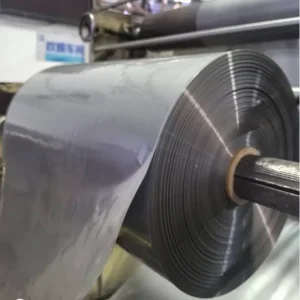
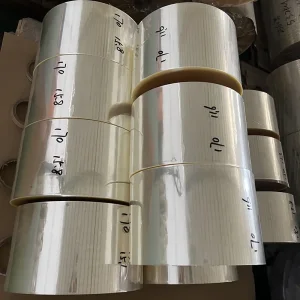
High-purity packaging substrates optimized for pharmaceutical blister lines, container sealing, and industrial application stability.
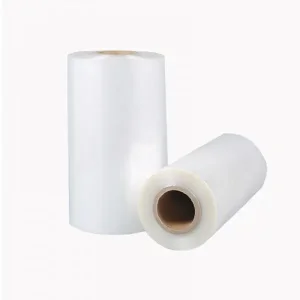
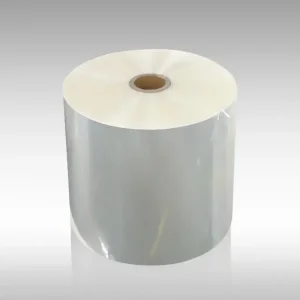
This paper evaluates the materials science, thermoforming kinetics, regulatory benchmarks, and factory automation systems driving the global supply of pharmaceutical-grade Polyvinyl Chloride (PVC) and laminated films from China to the worldwide drug manufacturing sectors.
Zhongshan Tianchen New Materials Co., Ltd. represents a premier, one-stop packaging material procurement platform established on the foundation of more than 20 years of intensive, field-tested experience in the film packaging and processing industry. Driven by a relentless commitment to resource integration, technological innovation, and addressing critical customer pain points, Tianchen ensures that global pharmaceutical and consumer brands receive the highest grade packaging films.
At Tianchen, we coordinate professional production lines, dedicated research and development centers, and seasoned international sales teams. Quality control is embedded in our manufacturing DNA: we run an advanced Quality Management System (QMS) ensuring that all structural properties, optical clarity, thickness deviation, and barrier attributes align with precise client specifications. Combining large-scale calendar production with localized logistics expertise, we have earned the trust of global clients seeking robust packaging solutions.
In a fiercely competitive global marketplace, manufacturers require suppliers who offer both product range and rigorous assurance. As a primary source factory and engineering hub, we act as a centralized platform. Our portfolio encompasses high-performance PVC films, eco-friendly heat-shrink films, durable custom-printed labels, and high-barrier laminates like PVC/PVDC and PVC/PE/PVDC.
By consolidating raw material sourcing, state-of-the-art calender lines, and cleanroom slitting operations, Tianchen reduces procurement complexity, manages supply chain risks, and ensures that clients skip intermediary markups. Our goal is clear: to offer the ultimate protective barrier that safeguards the therapeutic efficacy of pharmaceuticals throughout their lifecycle.
Pharmaceutical-grade PVC (Polyvinyl Chloride) film remains the workhorse of oral solid dose blister packaging due to its exceptional thermoformability, mechanical strength, and cost-effectiveness. However, the evolution of sensitive drug molecules requires a transition from basic mono-films to highly engineered barrier matrices.
Utilizing suspension-grade PVC resin with low residual vinyl chloride monomer (VCM) < 0.5 ppm. Calcium-Zinc (Ca-Zn) thermal stabilizers are integrated to entirely eliminate heavy metals (lead, cadmium, tin) from the formula.
Application of PVDC (Polyvinylidene Chloride) emulsion coating and Aclar® (PCTFE) lamination. A triple structure like PVC/PE/PVDC (e.g., 250µm PVC / 25µm PE / 90g/m² PVDC) achieves excellent barrier protection.
Optimizing molecular weight distribution to lower the softening point (Tg ≈ 80°C), allowing fast thermoforming with precise pocket thickness consistency on rotary or flatbed machinery.
Our R&D roadmap focuses heavily on eliminating plasticizer migration issues. By implementing polymeric stabilizers and advanced calendering temperature control profiles, we manufacture rigid PVC films that exhibit zero cracking and minimal shrinkage (< 2.5% at 60°C/1 hour), maintaining shape-stability and tight seals with lidding foils.
Pharmaceutical packaging operates under strict conditions: every packaging design must act as a barrier against moisture, oxygen, light, and physical impact. Below is an overview of how our PVC films are structured for various industry challenges:
| Application Type | Material Combination | Primary Protection Target | Key Parameter / Barrier Spec |
|---|---|---|---|
| Standard Oral Solids (Tablets & Capsules) | Mono PVC (250µm - 300µm) | Physical protection, dust barriers, dust-free thermoforming compatibility | WVTR: < 2.5 g/m²·24h (38°C, 90% RH) |
| Moisture-Sensitive Antibiotics | PVC / PVDC (40g/m² to 90g/m²) | Hydroscopic decomposition prevention | WVTR: < 0.6 g/m²·24h (up to 90g coating) |
| Vial / Ampoule Trays | Thick Rigid PVC (350µm - 500µm) | Mechanical rigidity, impact absorption, drop protection | Tensile Strength: > 44 MPa |
| Highly Sensitive Formulations | PVC / PE / PVDC duplex/triplex | Simultaneous oxygen & moisture barrier | OTR: < 1.5 cm³/m²·24h·bar |
For pharmaceutical packaging manufacturers, regulatory compliance is the ultimate foundation of operations. The slightest chemical migration or physical defect can compromise patient safety and lead to costly product recalls.
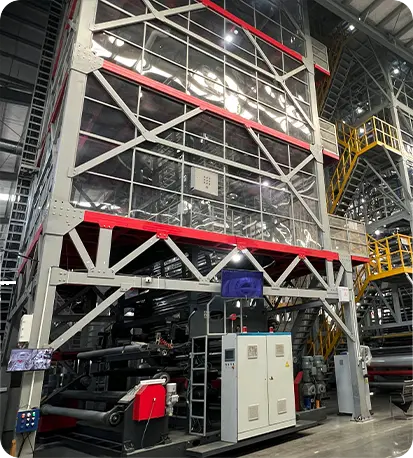
Zhongshan Tianchen New Materials Co., Ltd. uses high-precision industrial manufacturing systems to ensure material uniformity across thousands of tons. Through Factory 4.0 upgrades, our production lines achieve high yield and quality control:
Thickness Tolerance Deviation
Inline Laser Inspection
ISO Standard Cleanrooms
Packaging Expertise
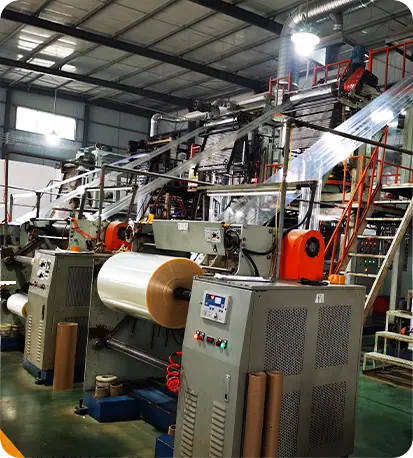
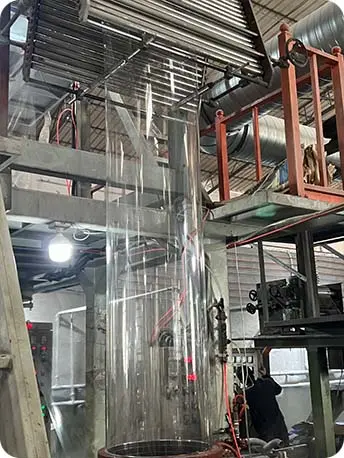
Our automated calendering lines utilize continuous thickness measurement sensors that auto-adjust the roll gap in real-time. This eliminates the risk of thinning spots in the blister pockets during thermoforming—a major cause of barrier compromise. In addition, we deploy digital optical inspection systems on the extrusion lines to scan every running meter for pinholes, black spots, gels, or dust particles. Any roll failing the threshold is automatically flagged, quarantined, and recycled.
International drug manufacturers demand high reliability when sourcing primary packaging components. At Tianchen, we address these specific global requirements through a structured framework:
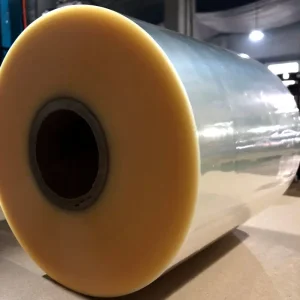
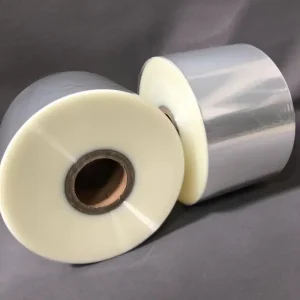
We supply precise widths ranging from 50mm to 1000mm, with roll diameters matched to fit key packaging machines (Uhlmann, Romaco, IMA, etc.) directly without custom adaptors.
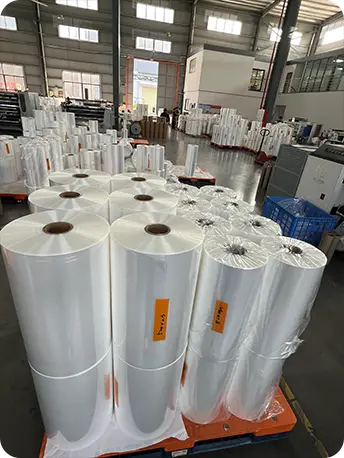
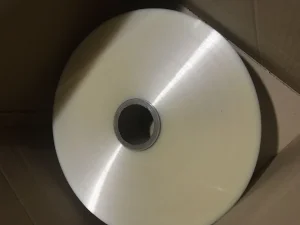
Rolls are wrapped in protective PE liners, suspended on heavy-duty plastic plugs inside reinforced cardboard boxes, and loaded onto fumigated wooden pallets to prevent transit damage or moisture absorption.
Every batch is shipped with a comprehensive Certificate of Analysis (CoA) containing dimensional, thermal, and barrier test results, traced back to the raw material batch number.
Technical clarifications on performance specs, storage, and blister packaging machine compatibility.
For standard rigid mono PVC (250µm), the WVTR is approximately 2.0 to 2.5 g/m²·24h under tropical conditions (38°C, 90% RH). When coated with 40g/m² PVDC, the rate drops below 0.8 g/m²·24h. For high-barrier multi-layer films (e.g., PVC/PE/PVDC 90g), the WVTR is reduced to less than 0.45 g/m²·24h, providing maximum moisture protection for hygroscopic products.
Static electricity attracts airborne micro-particulates, which can cause seal failures. We apply inline high-voltage ionization static eliminators directly during the calendering and slitting processes. The entire process takes place in our Class 100,000 cleanroom, where operators wear cleanroom garments. The rolls are sealed in anti-static PE bags immediately after slitting.
No, our PVC film for pharmaceutical blister packaging is strictly rigid PVC and is 100% free of added plasticizers (such as DEHP, phthalates, or adipates). We use high-purity rigid resins and non-toxic Calcium-Zinc thermal stabilizers that are compliant with US FDA 21 CFR regulations, ensuring no risk of chemical migration into the enclosed medication.
Our rigid PVC films have an optimal thermoforming temperature window between 110°C and 130°C. Within this range, the polymer becomes sufficiently plastic to form clean, sharp pocket structures without overheating, scorching, or thinning. Exact parameters may vary depending on whether you run a flatbed or rotary packaging line.
Yes, we provide custom slitting down to the precise roll width requested by the client, with tolerances within ±0.5mm. Standard MOQs for customized slitting run from 1 to 2 metric tons, depending on the custom width and thickness required. We also offer trial rolls for validation and compatibility tests on your packaging lines.
Explore our wider portfolio of heat-seal, barrier-coated, and high-shrinkage films manufactured to international standards.
 Tianchen Materials