A label can transform a plain bottle into a bright, shelf-ready package. The right Pvc Shirnk Film Label can also wrap around curves, cover a container’s full surface, and carry detailed graphics. Yet label choice is not just an artwork decision. Film material, shrink behavior, application equipment, and end-of-life considerations all matter.
Industry data puts packaging choices in a broader context. Eurostat reported that the European Union generated 186.5 kilograms of packaging waste per person in 2022, including 36.1 kilograms of plastic packaging waste. This figure does not measure shrink labels alone, but it highlights why material selection and disposal claims deserve careful review. AWA Alexander Watson Associates’ shrink-sleeve market research and Smithers’ packaging market reports offer further industry context for label formats and market trends. Their findings should be checked against the report edition and scope before being used in purchasing decisions.
There is no expert interview or verifiable quotation among the supplied source materials. Naming an expert or inventing a quote would weaken credibility. A practical question remains: does the chosen sleeve perform reliably on the actual container and production line? Testing helps answer it. A sleeve that looks perfect on a screen may wrinkle around a shoulder, distort small text, or require different application settings. This guide compares common PVC shrink label types, their packaging uses, and the details buyers should check before specifying a format. Small differences matter.
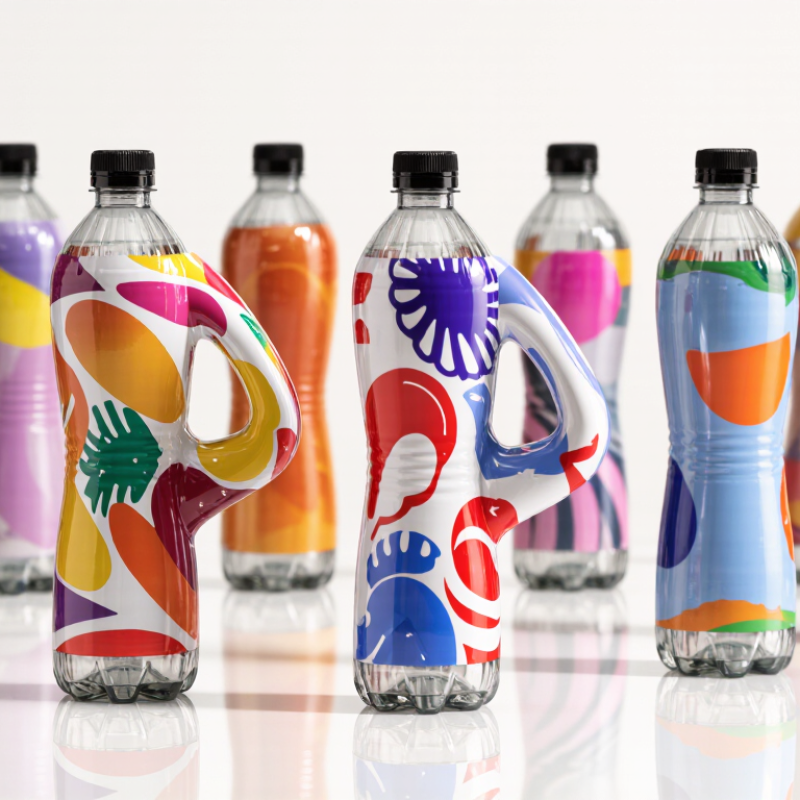
PVC shrink film labels conform by contracting around a container when exposed to controlled heat. A full-body sleeve can cover curved shoulders, narrow waists, and broad panels without relying on a flat label surface. For a bottle with a tapered neck, the sleeve’s dimensions and shrink behavior need careful matching. Otherwise, wrinkles may gather near the shoulder, or graphics may distort.
Tamper-evident bands are smaller sleeves placed over a cap and neck, while partial sleeves cover selected areas of a package. Each format fits differently, so measure the container at several points, not just across its widest section. Check the film’s shrink direction and the package’s heat tolerance before choosing tunnel settings. A sample run can reveal loose edges, trapped air, or uneven seams. Small details matter.
The container’s finish also affects the result. Condensation, surface texture, and sharp edges can complicate sleeve placement or sealing. PVC can provide clear, printable coverage, but it is not the right choice for every package or recycling stream. Confirm local material requirements and test the finished pack under normal handling conditions. Even careful measurements can miss a real-world wrinkle.
Top PVC Shrink Film Label Types for Packaging?
Full-Body Shrink Sleeve Labels for All-Around Product Coverage
Full-body PVC shrink sleeves wrap containers from neck to base, giving products a continuous 360-degree label surface. They suit bottles with curves, shoulders, or narrow waists, where pressure-sensitive labels may wrinkle or leave gaps. Bright graphics can continue around the container. A perforated band can also provide a visible tamper cue when correctly specified. Still, it is not magic. Heat, fit, and container shape affect the finished sleeve.
PVC film offers strong shrink performance and clear print detail, but the converter should match film thickness and shrink settings to the package. Too much heat can distort a container; poor sizing can cause folds. Grand View Research valued the global shrink sleeve labels market at USD 12.4 billion in 2022 and projected a 5.4% CAGR through 2030. This market forecast indicates demand, not proof that every sleeve type suits every product.
Tips: Test sleeves on actual filled containers, not only empty samples. Check the label after cooling for wrinkles, readable text, and secure edges. Ask your packaging supplier about local recycling compatibility, since PVC may not fit every recycling stream. That detail is easy to overlook.
Tamper-evident shrink bands wrap around a container’s cap and neck, creating a visible link between the closure and package. When opened, a perforated strip or tear tab gives the user a clear way to remove the band. The film shrinks under controlled heat, so a snug fit depends on the container shape, film thickness, and application settings. Small details matter.
A band should stay smooth around the cap without covering important opening features or making removal awkward. Test it on the actual bottle or jar, not just a sample sheet. Look for loose edges, burn marks, wrinkles, and tears after application. These flaws can make tampering harder to judge. PVC shrink film is one option, but suitability depends on the package and processing conditions; confirm compatibility with the container and equipment before production. A band can show that its seal has been disturbed, but it cannot prove that the contents were never accessed. That distinction is easy to overlook. Careful fit checks and consistent application help make the tamper evidence useful and dependable.
Partial-body and multipack shrink labels offer focused coverage without hiding an entire package. A partial-body label can wrap around a bottle’s center, leaving the neck and base visible. This works well when shoppers need to see the container shape or product color. A snug fit also helps reduce wrinkles around curves. Still, uneven heating can distort graphics, so trial runs matter.
Multipack shrink labels group several items, such as two small jars or a row of drink bottles. They can carry shared product information while keeping individual containers easy to recognize. For a clean finish, match film width to the bundle and check that labels stay secure during handling. Tiny gaps can look careless. I’ve seen packaging teams overlook them until cartons are packed.
Tips: Measure the widest point of each container or bundle before choosing a label. Test the film on the actual packaging line, since heat and conveyor speed affect shrink results. Check seams, print alignment, and removal points by hand. One test may not be enough. Recheck after storage, too.
Choosing a PVC shrink film label starts with the package, not the artwork. Full-body sleeves cover most of a bottle and suit curved surfaces or large graphics. Partial sleeves leave shoulders or bases exposed, which can reduce material use. Tamper-evident bands are narrower and fit around caps and necks. Measure the container at its widest and narrowest points, then compare its profile with the film’s shrink range. A label that fits a straight sample may wrinkle around a shoulder.
Tips: Check film thickness, print placement, and the shrink tunnel’s heat settings together. Test on the line. Watch for lifted edges, distorted text, or film gathering near the base. A neat sample can still mislead.
Match the label to the package’s shape and production speed. Tight curves may need a different shrink response than straight walls. Confirm that the seal location stays away from important text, and inspect several filled containers after cooling. PVC may not suit every package or recycling stream, so check local material guidance before finalizing the design. Small test runs help reveal problems, though they cannot reproduce every production variation. A little uncertainty is normal; document the settings that work and review them when the container changes.
| Label Type | Typical Coverage | Common Packaging Uses | Key Advantages | Selection Considerations |
|---|---|---|---|---|
| Full-Body Shrink Sleeve | Covers most or all of the container body; may extend over the shoulder or base depending on the design. | Bottles, cans, jars, and other containers with curved or irregular surfaces. | Provides a large printable area and can conform to complex container shapes. | Check container geometry, sleeve fit, seam placement, and tunnel performance. Confirm that the label will not obscure required product information. |
| Partial-Body Shrink Sleeve | Covers a selected portion of the container, such as the center or upper body. | Beverage bottles, personal-care containers, and products that use a separate base container design. | Offers prominent graphics while leaving part of the container visible. | Choose coverage based on the available label area and the container’s shape. Test for even shrinking and consistent positioning. |
| Tamper-Evident Neck Band | Fits over a cap, closure, or neck area and may extend onto the container. | Bottles and jars requiring a visible indication that the closure has been disturbed. | Can provide visible tamper evidence when correctly designed and applied. | Match the band dimensions to the closure and neck. Verify perforation, opening behavior, and compatibility with the filling and shrink process. |
| Full-Body Sleeve with Tamper-Evident Feature | Covers the container body and includes a designed perforation or opening feature around the closure area. | Products that need extensive graphics along with a visible opening feature. | Combines broad label coverage with a consumer-visible way to access the package. | Ensure the perforation is positioned correctly and opens as intended. Validate label fit, application, and opening performance on production packaging. |
| Multipack Shrink Sleeve | Wraps around two or more containers as a grouped pack. | Bundled beverages, personal-care items, and other products sold together. | Can hold a group of products together and provide shared pack graphics. | Confirm pack stability, film strength, opening method, and compatibility with the bundling equipment. Consider how the pack will be separated for use and disposal. |
How to choose: Start with the package shape, required label coverage, tamper-evidence needs, and application equipment. Then test the selected PVC film and shrink settings on the actual container. PVC shrink films can be sensitive to processing conditions, and recyclability depends on local collection systems and the materials used in the complete package.
It wraps a container from neck to base, creating a continuous 360-degree print surface. It can follow curves, shoulders, and narrow waists.
It can reduce wrinkles or gaps on curved containers. The fit still needs testing.
It can provide a visible tamper cue when correctly specified. It is not a substitute for checking the finished package.
Test sleeves on filled containers. After cooling, check for wrinkles, readable text, and secure edges.
Yes. Excess heat may distort a container, while poor sizing can create folds. Check the actual package.
It covers a selected area, often the bottle’s center, while leaving the neck or base visible. Product color can show through.
They can group jars or bottles under shared printed information. Match the film width to the bundle and check the labels by hand.
Heat and conveyor speed affect the result. Check seams, print alignment, and removal points, then recheck after storage. One test may not be enough.
No. Ask your packaging supplier about local recycling compatibility. That detail is easy to miss.
Pvc Shirnk Film Label options are designed to fit different package shapes and coverage needs. When heated, the film contracts around a container, helping labels follow curves, contours, and other features while presenting product information across the surface. Full-body shrink sleeves provide all-around coverage, making them suitable when a package needs a broad, continuous label area. Tamper-evident shrink bands instead wrap around a cap, closure, or seal to show whether the package has been opened.
For more selective coverage, partial-body labels highlight a chosen section of a container, while multipack labels can hold several items together as one package. Choosing the right type depends on the package’s shape, the area that needs labeling, the desired appearance, and whether closure protection or bundling is important. Considering these factors helps match the label style to the packaging’s practical and visual requirements.
Tianchen Materials