Choosing Opp Packaging Film in 2026 requires more than comparing thickness and price. OPP, especially BOPP, remains popular for snack packs, labels, tapes, and overwraps. Its clarity, stiffness, and moisture resistance support high-speed packaging lines. However, performance depends on film structure, coating, sealant, and machine settings. Smithers’ 2024 report, The Future of BOPP Films to 2029, identifies continued market growth driven by lightweight packaging and retail convenience. Grand View Research also forecasts steady expansion in the global BOPP films market through 2030. Forecasts differ. That matters.
A responsible choice starts with the product, not the supplier’s brochure. Check oxygen and water-vapor transmission rates, coefficient of friction, haze, tensile strength, and seal initiation temperature. ASTM D3985, ASTM F1249, ASTM D1894, and ASTM D1003 can support comparable testing. For printed packs, confirm ink adhesion and corona-treatment levels. For high-speed lines, request trial rolls. Watch web tension, edge curl, telescoping, and seal contamination. A film that looks excellent under showroom lighting may fail beside a hot sealing jaw. It happens.
Sustainability also needs evidence. The Flexible Packaging Association’s industry reports emphasize material efficiency, while recyclability depends on the complete package and local collection systems. Ask for verified composition, recycled-content claims, food-contact documentation, and life-cycle data. Do not treat “eco” as a performance specification. Compare supplier certificates, test conditions, and batch consistency. This guide explains how to choose Opp Packaging Film by balancing cost, protection, print quality, compliance, and end-of-life options. Some decisions will remain imperfect. Good sourcing makes those limits visible, measurable, and revisable.
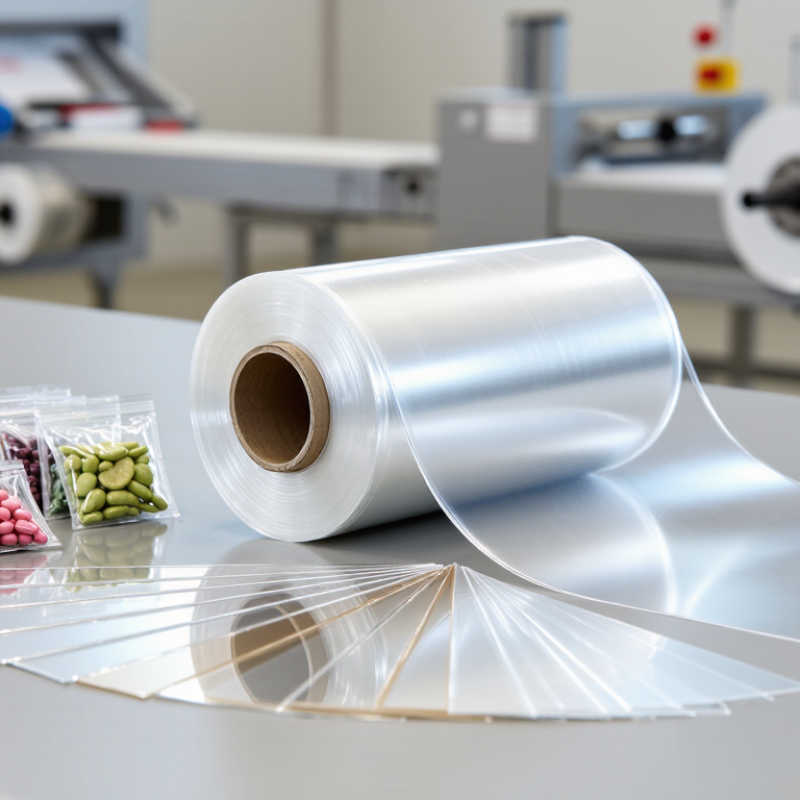
OPP means oriented polypropylene, a thermoplastic film stretched after extrusion. Most packaging uses BOPP, stretched in both machine and transverse directions. This orientation aligns polymer chains. The film becomes clearer, stiffer, and more resistant to tearing. It also handles fast packaging lines well.
Imagine a thin film passing over heated rollers, then stretching like soft dough. Its thickness may be only 15–40 micrometres. Standard OPP offers strong moisture resistance, but its oxygen barrier is limited. Heat-sealable grades usually add a modified surface layer. That detail matters. A film can look excellent and still open at the seal.
The OECD’s Global Plastics Outlook reports that packaging created about 40% of global plastic waste in 2019. That figure should influence every 2026 purchasing decision. Choose the lightest gauge that survives filling, transport, and shelf handling. Check seal temperature, coefficient of friction, stiffness, print adhesion, and end-of-life compatibility. European technical guidance also emphasizes designing packaging for simpler material streams. A recyclable structure may still fail if coatings, inks, or mixed layers complicate sorting. Real production trials remain essential. Laboratory results can mislead. A film that runs smoothly for ten minutes may wrinkle after an entire shift.
OPP means oriented polypropylene film. It is stretched after extrusion. This process aligns its polymer chains. The film becomes clearer, stiffer, and harder to tear.
BOPP is OPP stretched in two directions. The stretching improves clarity, stiffness, and running performance. It suits fast packaging lines and printed applications.
Common thicknesses range from 15 to 40 micrometres. Choose the lightest gauge that survives filling, transport, and shelf handling. Thinner is not always better.
Standard OPP resists moisture well. Its oxygen barrier is limited. For sensitive products, request specific oxygen and moisture transmission data.
Heat-sealable grades often use a modified surface layer. Incorrect seal temperature, pressure, or speed can create openings. A clear film can still seal poorly.
Test thickness at multiple points across several rolls. Check haze, tensile strength, stiffness, friction, print adhesion, and seal performance. Test it on the actual machine.
Request recent certificates of analysis and batch records. Ask for samples from several production lots, not one attractive roll. One roll can mislead.
Ask for verified recycled-content claims, energy information, and product-specific life-cycle data. A thinner film may reduce material use, but weak stiffness can increase packaging waste.
Laboratory results may not predict a full shift. A film can run smoothly for ten minutes, then wrinkle later. Record speed, waste, seal failures, and downtime.
Choosing the right Opp Packaging Film in 2026 requires more than comparing price and thickness. OPP film is a clear, lightweight polypropylene material that protects packaged goods while providing strength, printability, and an attractive appearance. The best choice depends on key properties such as tensile strength, transparency, gloss, sealability, barrier performance, stiffness, and resistance to moisture or abrasion. These factors should be matched with the product’s weight, shape, shelf-life requirements, filling process, and packaging equipment.
Different OPP film structures may suit snack bags, labels, overwraps, stationery, household products, or laminated packaging. Buyers should also evaluate supplier consistency, technical support, quality-control procedures, batch traceability, and delivery reliability. Sustainability should be considered through material efficiency, downgauging opportunities, recyclable structures, and responsible production practices. A practical selection process includes defining product needs, comparing film specifications, testing samples on actual equipment, checking finished-pack performance, reviewing total cost, and confirming that the final solution meets applicable packaging and recycling requirements.

 Tianchen Materials