Choosing Pvc Shrink Film in 2026 means matching the film to the product, packaging line, and delivery conditions. A clear finish matters, but appearance is only one part of the decision. Film thickness, shrink behavior, seal strength, and puncture resistance can affect both package quality and production speed. Small details matter.
Start with the item itself. A box with sharp corners may need different protection from a smooth bottle or bundled product. Then consider how the film will run through your equipment, including sealing and heat-shrinking settings. A film that looks suitable on a sample roll may behave differently at full line speed. Test it.
Buyers should compare supplier specifications rather than rely on a single label or general claim. Ask for technical data, storage guidance, and documented suitability for the intended product and market. Confirm that the film works with your equipment, and evaluate finished packs under realistic handling conditions. These checks are practical, not glamorous.
Cost also deserves a closer look. A lower-priced roll may lead to more waste, weaker seals, or frequent adjustments. On the other hand, paying extra does not guarantee a better result. There is no perfect choice for every pack. This guide explains the key factors to compare, the questions to ask suppliers, and the trade-offs worth reviewing before choosing Pvc Shrink Film for your packaging needs.
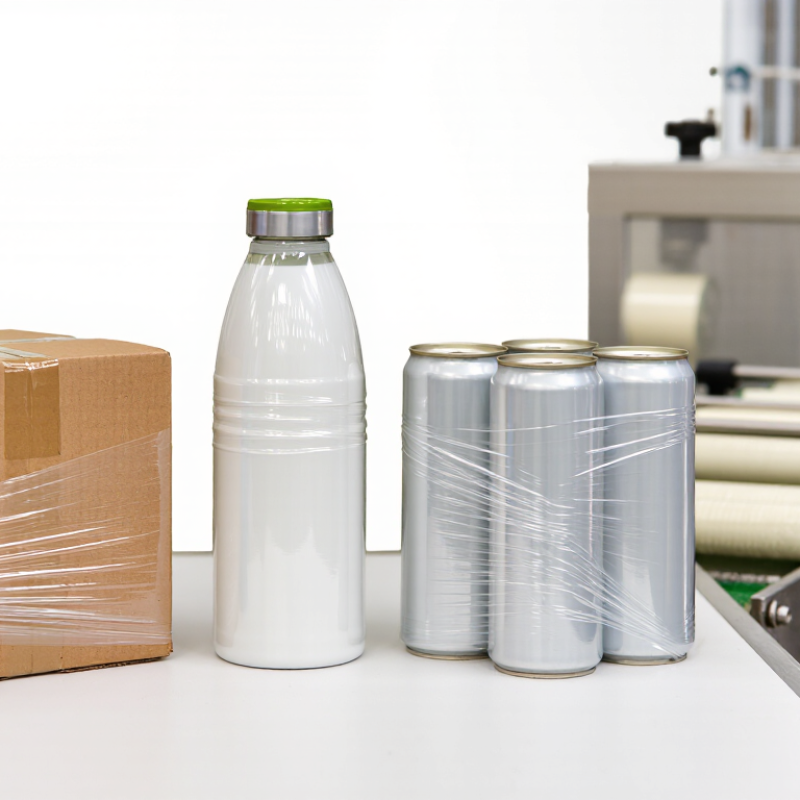
Define Package Size and Select a PVC Film Gauge, Commonly 30–50 μm
Measure the package at its widest points, including its height, depth, and any projecting corners. For a tray or carton, record the full perimeter and allow room for film overlap and shrink. Then trial a gauge within the common 30–50 μm range: lighter, smooth packages may work with thinner film, while heavier loads or sharp edges often need thicker film. These are starting points, not guarantees. A neat rule can mislead.
Gauge affects handling and pack appearance, but package geometry and tunnel settings matter too. A thick film may resist tearing yet shrink unevenly if heat or airflow is poorly matched. A thin film can look clear and tight, then split at a corner. PlasticsEurope’s Plastics—The Fast Facts 2024 reports 413.8 million tonnes of global plastics production in 2023; that scale is context, not proof that one gauge suits every pack. Test representative packages and check seal strength, corner coverage, clarity, and damage after handling.
Tips: Compare at least two gauges on the actual package. Keep temperature, line speed, and film orientation consistent. Record failures. One awkward carton can expose a sizing assumption you missed.
Compare Free-Shrink Ratings at 100°C; Many PVC Grades Shrink 40–60%
A free-shrink rating describes how much a film contracts when heated without a product or package holding it in place. At 100°C, many PVC grades show roughly 40–60% shrink, but the exact figure depends on the test method, exposure time, and shrink direction. Check whether the supplier reports machine-direction and cross-direction values separately. A single percentage can hide an important imbalance.
Use the rating as a comparison point, not a promise of finished-pack performance. A film marked 50% free shrink may behave differently around a square carton than around a smooth bottle. Film thickness, package shape, seal placement, and tunnel airflow all affect the result. Not on every pack. Test sample rolls with your actual product, and inspect corners, seams, and labels for wrinkles or distortion. A short, controlled trial often reveals more than a datasheet.
For selection, compare shrink values measured under the same conditions, then check the film’s recommended temperature range and sealing behavior. Start with a moderate tunnel setting and adjust gradually; excessive heat can cause uneven contraction or damage sensitive contents. Small differences matter. I would not choose solely by the highest shrink percentage. A lower, more balanced rating may give a cleaner fit, though testing can expose assumptions that looked sensible on paper.
How to Choose PVC Shrink Film for Packaging in 2026? Compare Free-Shrink Ratings at 100°C
Many PVC shrink-film grades show approximately 40–60% free shrink in at least one direction at 100°C. Use the indicative ranges below to compare options; actual performance varies by film formulation, orientation, thickness, and test conditions.
| Generic Film Type |
Typical Thickness |
Free Shrink at 100°C
(Machine Direction, MD) |
Free Shrink at 100°C
(Transverse Direction, TD) |
Potential Packaging Use |
Selection Consideration |
| Lower-shrink PVC |
25–40 μm |
35–45% |
40–50% |
Products that need moderate film contraction |
May help limit excessive pull-in on less robust packages; confirm the finished pack remains tight. |
| General-purpose PVC |
19–30 μm |
40–55% |
45–60% |
Commonly shaped retail packs and multipacks |
A balanced starting point when the package shape and required shrink force are not highly specialized. |
| Higher-shrink PVC |
19–35 μm |
50–60% |
55–65% |
Packages with contours or areas requiring greater film take-up |
Check for distortion, excessive tension, or uneven shrinking on the product and seal. |
| Light-gauge PVC |
15–19 μm |
40–55% |
45–60% |
Lightweight products where reduced film use is a priority |
Assess puncture resistance, handling, and sealing performance on the actual packaging line. |
How to compare: Free-shrink percentages are indicative ranges, not guaranteed specifications for every PVC film. Compare MD and TD values measured using the same test method, temperature, and exposure time. ASTM D2732 is a commonly used method for measuring free linear thermal shrinkage of plastic film. Before purchase, request the film’s technical data sheet and trial it under the intended packaging and tunnel conditions.
Assess Clarity and Tensile Strength Using ASTM D1003 and ASTM D882
Choosing PVC shrink film in 2026 starts with the product, not the sample’s shine.
ASTM D1003 measures haze and luminous transmittance in transparent plastics. Haze can soften labels or make fine print look cloudy. Ask for results from film at a thickness close to your intended material. A thicker sample may appear clearer.
Keep the setup consistent. Compare samples using the same test conditions and, where possible, multiple specimens. Look at the actual wrapped item, too. A flat sheet tells only part of the story. Curves, folds, and printed areas can change how clear packaging appears. Small differences matter.
ASTM D882 evaluates tensile properties of thin plastic sheeting, including tensile strength and elongation. Request results in both machine and transverse directions; film may stretch differently across the roll. Check the reported thickness and test conditions before comparing suppliers. A high tensile value alone does not guarantee reliable wrapping or sealing. Shrink behavior needs its own practical trial. Test a few packages at your planned settings. One detail is easy to miss: inconsistent sample conditioning can cloud comparisons. It is worth repeating a test rather than trusting a neat-looking data sheet.
Match Shrink Behavior to Tunnel Settings and Test per ASTM D2732
PVC shrink film should be chosen for the package shape and the shrink tunnel’s actual operating conditions. Check shrink in both machine and transverse directions. A bottle with a narrow neck may need controlled transverse shrink, while a tray can show wrinkles if the film pulls unevenly. Film thickness and package spacing also affect how evenly heat reaches the surface.
ASTM D2732 measures free shrink of plastic film in a heated liquid at a specified temperature. The results show how much the film contracts in each direction, but they do not predict tunnel performance exactly. Treat them as a screening value. Real lines are less tidy. Airflow, conveyor speed, load size, and film tension all influence the finished pack. Run a small trial, adjusting one setting at a time, and inspect corners, seams, and labels for distortion. A useful starting point is the film supplier’s recommended temperature range, followed by checks at the line’s normal speed. Record the settings and compare them with the D2732 results. That link is easy to overlook. If shrink is uneven, review both tunnel conditions and film orientation before changing several variables at once.
Verify Food-Contact Compliance, Supplier Specifications, and Disposal Options
For food packaging, match the film to the product and its real handling conditions. Ask the supplier for current food-contact documentation covering the intended use, such as the food type, contact time, and temperature. Check that the documents apply to the film grade and manufacturing site you will purchase, not just a similar product. Keep the records with your packaging specifications. Small details matter.
Request measurable specifications, including thickness and tolerance, shrink behavior, sealing temperature range, roll width, and storage conditions. Ask how the supplier controls batch consistency and what happens when a lot falls outside specification. A sample roll can reveal wrinkles, haze, weak seals, or unwanted odor on your own equipment. Run a practical test. Film that looks clear on a desk may behave differently around sharp corners or warm products.
Plan disposal before approving the package design. PVC film is not accepted by every recycling program, and local rules can vary. Confirm options with your municipal service or a commercial recycler; do not assume curbside collection is suitable. Ask whether the supplier offers take-back or clear disposal guidance, and consider using only the film needed for a secure seal. I would verify this again when selling into a new region. Recycling access can change, and a neat label alone does not prove a package has a practical end-of-life route.
Conclusion
Choosing Pvc Shrink Film begins with measuring the package and selecting a suitable gauge, commonly between 30 and 50 μm. The right thickness should provide enough strength for handling without adding unnecessary material. Compare free-shrink performance at 100°C, noting that many grades shrink by approximately 40–60%, but actual results depend on the film and testing conditions. Clear, consistent film can improve product presentation, while tensile strength helps it withstand packaging and distribution.
Match the film’s shrink behavior to the temperature and dwell time of your shrink tunnel, then run trials with the intended package before production. ASTM D1003 can help assess optical clarity, ASTM D882 can measure tensile properties, and ASTM D2732 can evaluate free shrink. Also confirm food-contact suitability where relevant, review supplier specifications, and consider practical disposal options for the finished packaging. Together, these checks help you choose a film that fits both packaging performance needs and operating conditions.

 Tianchen Materials