Choosing the right Opp Heat Seal Pacakging Film in 2026 requires more than comparing prices and gloss levels. Packaging lines are becoming faster, product formats are changing, and buyers expect reliable sealing with less material waste. A film that performs well on one machine may wrinkle, split, or seal unevenly on another.
This guide examines the practical details that influence film selection. These include film thickness, seal initiation temperature, coefficient of friction, stiffness, transparency, and resistance to moisture or grease. Real performance depends on the complete packaging system. The film, sealing jaws, filling speed, pressure, and temperature must work together.
Small differences matter.
For example, a snack wrapper may need a low-temperature seal to protect heat-sensitive contents. A retail pouch may require stronger seals and better puncture resistance during transport. Experienced packaging teams usually request technical data sheets, migration information, and sample rolls before approving a material. They also test the film under actual production conditions, not only in a laboratory.
The choice is not always obvious. A thicker structure may feel safer, yet it can increase material use and affect machine efficiency. A cheaper film may also create more rejected packs. This article compares important options and explains how to evaluate suppliers, testing results, and sustainability claims with care. Some recommendations may need adjustment as equipment, regulations, and packaging goals evolve. That is part of making a dependable decision.
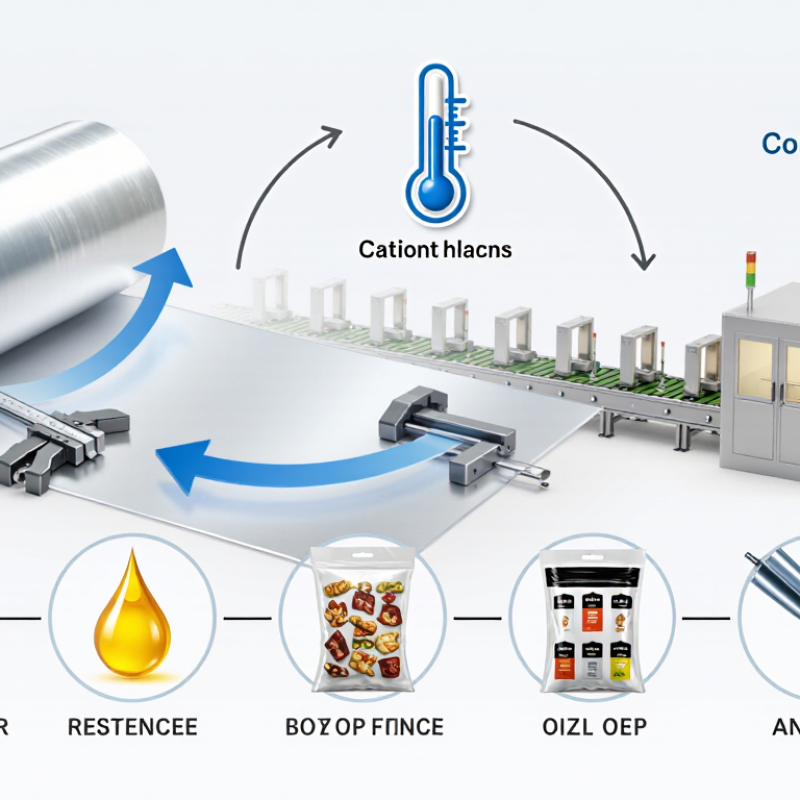
OPP heat seal packaging film is an oriented polypropylene film designed to close with controlled heat and pressure. OPP means oriented polypropylene, while “oriented” describes how the film is stretched to improve strength, clarity, and stiffness. Standard OPP may not seal reliably by itself. Heat-sealable grades usually include a modified surface or coextruded sealant layer that softens at a lower temperature.
In practical packaging lines, the film passes through heated jaws or sealing rollers. The sealant layer melts briefly, bonds to the opposite surface, and cools into a closed seam. A good film should provide stable sealing, useful transparency, resistance to moisture, and smooth machine running. Key specifications include thickness, seal initiation temperature, hot tack, coefficient of friction, and sealing strength. Small details matter.
Choosing this film requires more than checking a glossy sample. Test it on the actual machine, using the intended speed, pressure, and filling material. A film may seal well in a laboratory but fail when powder contaminates the seal area. That distinction matters. For food-contact packaging, request current compliance documents and verify suitability for the product, temperature range, and market requirements. Barrier performance also needs attention, because clear OPP does not automatically provide strong oxygen or aroma protection. Some assumptions are easy to make, and some are wrong. Begin with measured trials, not appearance alone.
Choosing OPP film starts with the product, not the film catalog. For snacks, bakery goods, and dry foods, check oxygen transmission rate (OTR) and water vapor transmission rate (WVTR). These values help protect crispness, aroma, and shelf life. Smithers’ 2024 flexible packaging analysis identifies barrier performance and downgauging as major development priorities. However, thinner is not always better. A film that saves material may lose stiffness, puncture resistance, or sealing reliability.
How to Choose OPP Heat Seal Packaging Film in 2026?
Matching OPP film to the product starts with heat, moisture, and surface friction. Dry snacks often need high clarity and reliable seal initiation. Powders need stronger seals and careful control of fine particles. Greasy products can contaminate the seal area quickly. A sealant layer with suitable hot-tack performance helps maintain package integrity. Smithers’ 2024 flexible packaging analysis expects continued demand for lightweight films, but thinner structures leave less room for process errors. That matters on fast packaging lines.
The machine is equally important. Check jaw temperature, pressure, dwell time, and line speed together. A film that seals at 115°C may fail when dwell time becomes very short. Measure the coefficient of friction before changing the film. Poor slip can cause web wandering, wrinkles, or unstable registration. Grand View Research reported that the global flexible packaging market was valued at about 257.9 billion dollars in 2022, showing how widely these process decisions affect production efficiency. Numbers do not replace trials.
My first film trial was too optimistic. The seals looked good, yet several opened after cooling. Test hot tack, burst strength, seal strength, and aging under real filling conditions. Use the actual product, not clean laboratory samples. For refrigerated or humid applications, review moisture resistance and low-temperature flexibility. For high-speed machines, compare seal windows rather than one ideal temperature. Small differences in coating, gauge, and tension can change the result. 马会
Choosing OPP heat seal packaging film in 2026 starts with the seal, not the lowest price. During line trials, measure seal strength using a controlled method such as ASTM F88. Test both average force and the weakest result after conditioning. A film may seal at 125°C in the laboratory but fail when jaw pressure, speed, or contamination changes. Check hot tack as well. Watch the corners.
Clarity affects how customers judge freshness and quality. Inspect haze, gloss, and surface uniformity under warehouse lighting, not only under bright laboratory lamps. ASTM D1003 can help quantify haze. Barrier performance requires equal care. Compare oxygen transmission rate and water vapor transmission rate with the product’s actual sensitivity. A high barrier value is not always necessary, and laboratory numbers can mislead when humidity changes. Request recent test reports and confirm their test conditions.
Cost should include film usage, machine speed, energy, scrap, and rejected packs. A thinner structure may reduce material cost but increase breaks or sealing defects. Calculate cost per thousand finished packages, not cost per kilogram alone. My own early evaluation would have focused too heavily on unit price; that approach can miss downtime and rework. Run a production trial with several lots, record temperature and pressure, and review variation before approval. Reliability comes from repeatable results, not one attractive sample.
Evaluation of seal strength, clarity, barrier performance, and cost efficiency
The chart uses a 0–100 evaluation index, where a higher score is better. Scores are based on typical performance ranges for generic heat-sealable BOPP film structures: standard transparent film, coated high-barrier OPP, and metallized heat-sealable OPP. Cost efficiency is scored higher when the expected material cost is lower.
In practical selection, standard heat-sealable BOPP is usually preferred for transparent, cost-sensitive applications; coated high-barrier OPP is suitable when oxygen and moisture protection are important; metallized OPP provides very strong barrier performance but does not offer full transparency.
How to Choose OPP Heat Seal Packaging Film in 2026?
How to Select a Reliable OPP Film Supplier in 2026?
Choosing a reliable OPP film supplier requires more than comparing prices. Ask for recent technical data, production samples, and batch records. Check thickness tolerance, haze, gloss, tensile strength, and seal initiation temperature. These details affect machine speed and package appearance.
A dependable supplier should explain how its film performs on your equipment. Send a real package sample for testing. Review seal strength after storage, transport, and temperature changes. Ask whether the supplier can provide certificates, inspection reports, and full roll traceability. Factory experience matters, but communication matters too. Slow replies can become expensive production delays.
Tips
Request three sample rolls from different batches. Measure thickness at several points. Test the film on your actual sealing machine. Confirm core size, roll width, minimum order quantity, and delivery capacity. Also ask how complaints are investigated. A clear corrective-action process is a strong reliability signal.
I once focused too heavily on a low quotation. The film looked acceptable, yet sealing became inconsistent during faster production. That experience changed my evaluation method. A reliable supplier should welcome technical questions, admit possible limitations, and suggest practical testing. No supplier is perfect. The better ones make problems visible early.
| Evaluation Dimension | Recommended Selection Target | Why It Matters | How to Verify | Supplier Questions for 2026 |
|---|---|---|---|---|
| Film Structure | Co-extruded or coated BOPP with a heat-sealable skin layer; select a sealant compatible with the package contents and sealing equipment. | The surface layer determines sealing performance, hot-tack behavior, coefficient of friction, and product compatibility. | Review the technical data sheet, layer construction, and a production trial using the actual packaging machine. | Is the film co-extruded or coated? What is the sealant chemistry and recommended sealing temperature range? |
| Thickness | Common packaging grades are approximately 15–50 micrometres, depending on application, stiffness, barrier needs, and converting process. | Thickness affects stiffness, tear resistance, yield, package appearance, and material cost. | Check thickness across the web and roll length using calibrated gauges; request thickness tolerance data. | What are the nominal thickness and allowable tolerance? How is thickness uniformity controlled across the roll? |
| Heat-Seal Initiation Temperature | Choose the lowest practical seal-initiation temperature that still provides the required seal strength and process window; many sealable OPP grades begin sealing within approximately 100–130°C, but actual values vary by structure and test method. | Lower initiation temperatures can support higher machine speeds and reduce energy demand, while minimizing distortion of heat-sensitive contents. | Perform heat-seal curve testing at different temperatures, dwell times, and pressures on the intended equipment. | Can you provide heat-seal curves and test conditions rather than a single seal-temperature value? |
| Seal Strength | Set the required seal-strength value according to package weight, drop risk, internal pressure, distribution conditions, and applicable regulations. | Adequate seal strength prevents leakage, contamination, and package opening during filling, transport, and storage. | Use a standardized seal-strength test such as ASTM F88/F88M, with results reported in N/15 mm or N/25 mm. | What minimum and average seal-strength results can you guarantee, and how are seal failures investigated? |
| Hot Tack | Select a film with hot-tack performance suitable for the machine’s filling speed, jaw pressure, cooling time, and product contamination risk. | Hot tack helps the seal remain closed immediately after sealing, before it has fully cooled. | Request hot-tack curves at the intended temperature, dwell time, and peel or pull speed; ASTM F1921 may be applicable. | How does hot-tack strength change with seal temperature and contaminated sealing surfaces? |
| Coefficient of Friction | Select a stable kinetic and static coefficient of friction compatible with the forming collar, rollers, guides, and automatic feeding system; a common starting range is approximately 0.20–0.35, subject to machine validation. | Incorrect friction can cause web slippage, misregistration, wrinkles, feeding problems, or unstable bag dimensions. | Test according to ASTM D1894 or an equivalent method under controlled temperature and humidity. | How is slip-agent migration controlled, and are friction results stable after storage and printing? |
| Optical Properties | Choose gloss, haze, and transparency according to product visibility and design requirements. Typical clear BOPP grades may offer high gloss and low haze, but values depend on grade and measurement conditions. | Optical consistency affects shelf appearance, print quality, and consumer perception. | Compare haze and luminous transmittance using ASTM D1003 or equivalent methods; measure gloss using ASTM D2457 or an equivalent method. | Can you maintain optical tolerances between production lots and provide retained samples for comparison? |
| Barrier Performance | Use standard OPP for moisture and general packaging needs; use a metallized, coated, or laminated structure when oxygen, moisture, aroma, or light barrier requirements are higher. | Barrier selection influences shelf life, flavor retention, crispness, oxidation protection, and product stability. | Specify oxygen transmission rate and water-vapor transmission rate with test conditions, such as ASTM D3985 and ASTM F1249 or equivalent methods. | Are barrier values measured on the film alone or on the complete laminate? What humidity and temperature were used? |
| Printability and Surface Treatment | For surface printing or lamination, specify the required surface energy, ink system, treatment level, and treatment-retention period. A commonly used initial target is at least 38 dynes/cm, subject to ink and adhesive validation. | Insufficient treatment can cause poor ink adhesion, blocking, delamination, and barcode or graphics defects. | Measure dyne level before printing and conduct ink adhesion, rub, tape, and aging tests. | What treatment level is guaranteed at shipment, and how long is the guaranteed treatment shelf life? |
| Roll Quality | Require straight edges, controlled telescoping, consistent winding hardness, clean splices, and no blocking, wrinkles, gels, or foreign particles. | Roll defects create downtime, web breaks, waste, print-registration errors, and inconsistent package dimensions. | Inspect roll samples, core dimensions, winding condition, splice records, and defect maps before commercial approval. | What are your defect classification, roll-inspection, splice, and nonconforming-product procedures? |
| Food-Contact and Regulatory Documentation | For food packaging, obtain a current declaration of compliance or regulatory statement applicable to the destination market and intended conditions of use. | Compliance depends on polymer composition, additives, inks, adhesives, food type, temperature, and contact duration. | Review migration testing, composition information, declarations, and applicable requirements such as FDA regulations or European Union food-contact rules. | Can you provide lot-specific compliance documents and notify customers before material or formulation changes? |
| Recyclability and Sustainability | Prefer a mono-material polypropylene solution where barrier, seal, print, and product-protection requirements allow; minimize unnecessary coatings, laminations, and material thickness. | Structure simplicity can improve recycling compatibility and reduce material use, but local collection and recycling rules must be considered. | Review the complete structure, recycled-content claim, life-cycle information, and destination-market recycling guidance. | Is the structure compatible with the target recycling stream, and can sustainability claims be supported by documented evidence? |
| Quality Management | Select a supplier with a documented quality system, controlled specifications, calibration records, traceability, corrective-action procedures, and change management. | A formal quality system reduces variation and makes defects easier to trace and correct. | Request audit evidence, certificates where relevant, sample certificates of analysis, and a written change-notification procedure. | What is your process for root-cause analysis, corrective action, customer complaints, and material changes? |
| Production Capacity and Lead Time | Confirm capacity for the required width, thickness, surface treatment, roll diameter, core size, and annual volume. Establish a written standard lead time and emergency-response plan. | Capacity and delivery reliability directly affect production continuity and inventory requirements. | Review historical on-time-delivery performance, production schedules, safety-stock options, and backup manufacturing arrangements. | What percentage of orders are delivered on time, and what contingency exists during planned maintenance or supply disruption? |
| Sample and Trial Support | Require production-representative samples, consistent sample labeling, technical support during machine trials, and a documented approval process. | Laboratory samples may not represent actual roll behavior, sealing stability, or print performance at commercial speed. | Run a controlled trial covering line speed, sealing settings, filling conditions, print quality, waste, and finished-package integrity. | Will technical personnel support the trial, and can the approved sample be retained as the commercial reference standard? |
| Total Cost of Ownership | Compare price per usable package, not only price per kilogram; include yield, waste, machine speed, energy, downtime, freight, and inventory costs. | A lower material price can be outweighed by higher waste, slower production, or seal-related complaints. | Use a controlled production trial and calculate cost per accepted package or square metre of usable film. | Can you provide yield calculations, standard waste assumptions, packaging details, and freight terms for a like-for-like comparison? |
It is oriented polypropylene film designed to close with controlled heat and pressure. The film is stretched for strength, clarity, and stiffness. Standard OPP may not seal reliably. Heat-sealable grades use a modified surface or sealant layer.
Heated jaws or rollers soften the sealant layer. The softened layer bonds with the opposite surface. Cooling creates a closed seam. Timing matters.
Review thickness, seal initiation temperature, hot tack, friction, and sealing strength. Also check transparency and moisture resistance. A glossy sample proves very little. Small details matter.
Dry snacks often need clear film and reliable low-temperature sealing. Check whether the seal forms quickly at the machine’s operating speed. A wide sealing window can reduce production problems. Do not trust one ideal temperature.
Fine powder can enter the seal area and weaken the seam. Choose a film with suitable seal strength and hot tack. Control filling dust carefully. Clean-looking samples can mislead you.
They can, but grease may contaminate the sealing surface quickly. Test seal strength with the actual product. Check seals after cooling and handling. The first trial may look better than reality.
Check jaw temperature, pressure, dwell time, and line speed together. A film sealing at 115°C may fail during very short dwell times. Poor friction control can cause wrinkles or web wandering. Machine settings are not minor details.
Use the actual machine, product, speed, and filling conditions. Measure hot tack, burst strength, seal strength, and aging. Test refrigerated or humid conditions when relevant. Laboratory results are only a starting point.
Choosing the right Opp Heat Seal Pacakging Film in 2026 requires more than comparing prices. This film is designed to create a secure heat seal while providing clarity, stiffness, printability, and efficient processing. The best option depends on product requirements, including moisture protection, appearance, filling speed, package size, and storage conditions. Important properties to review include seal initiation temperature, sealing range, seal strength, coefficient of friction, thickness uniformity, transparency, and barrier performance.
To match the film with products and machines, confirm compatibility with the packaging equipment, sealing jaws, operating speed, and temperature settings. Evaluate samples through practical tests for seal integrity, opening performance, clarity, and resistance to handling. Cost should be assessed through total packaging efficiency rather than film price alone, considering waste, downtime, energy use, and material consistency. A reliable supplier should provide stable quality, technical support, clear specifications, responsive communication, and dependable delivery for changing production needs.

Tianchen Materials