China Top 10 POF Film Manufacturers Which Should You Choose?

Time:2026-10-07 Author:Sophia
0%

China’s POF Film manufacturing sector has become a major source for shrink packaging used in retail, logistics, electronics, and food applications. Yet choosing a supplier requires more than comparing prices on a quotation sheet. Film clarity, shrink performance, sealing strength, thickness consistency, and production stability can directly affect packaging results.

Packaging industry consultant David Luttenberger once noted, “The best packaging solution balances performance, cost, and responsibility.” This principle matters when evaluating China’s top POF Film manufacturers. A reliable producer should demonstrate practical experience with multilayer co-extrusion, controlled shrink ratios, and different packaging machines. Factory audits, sample testing, and production-line trials can reveal details that brochures often hide.

Look closely at film haze, roll winding, seal contamination, and edge quality. Small defects become expensive during high-speed packing. Ask for recent test reports, quality-control procedures, export experience, and evidence of consistent batch performance. Certifications can support trust, but they should not replace independent verification.

This ranking guide compares leading manufacturers through product quality, technical support, customization, delivery reliability, and value. However, no universal winner exists. A supplier serving frozen food may not suit electronics packaging. Some manufacturers also provide impressive samples but weaker after-sales communication. That possibility deserves attention.

The right choice depends on your machine, product shape, packing speed, and target market. Test carefully. Question every claim. A lower initial price may create higher waste later. This guide helps buyers make a more informed decision while recognizing that supplier performance can change over time.
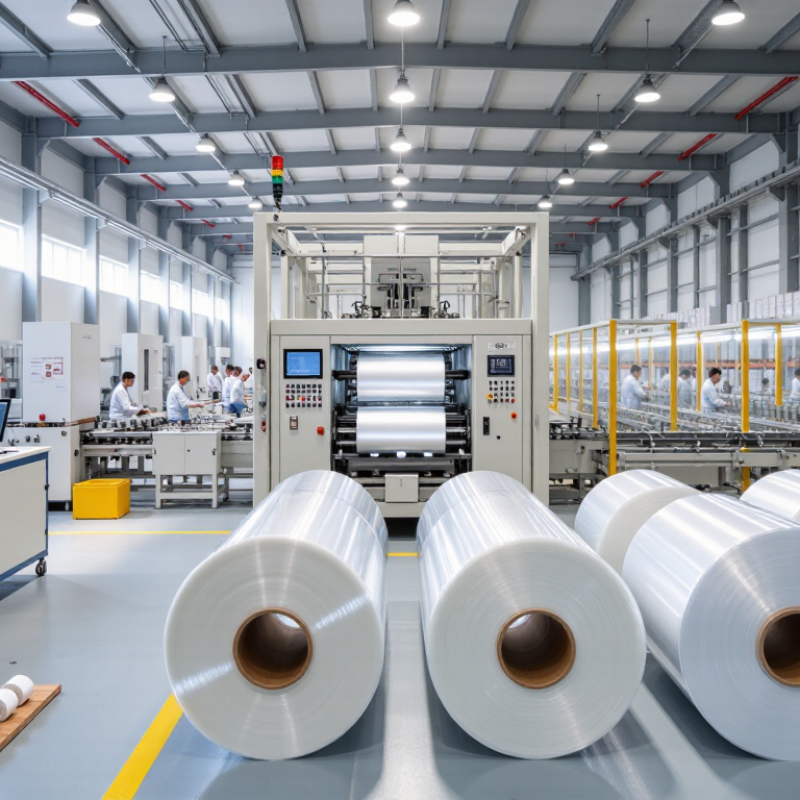
China Top 10 POF Film Manufacturers Which Should You Choose?

What Is POF Shrink Film and Where Is It Used?

POF shrink film is a transparent, multilayer polyolefin film that tightens when heated. It is commonly used to wrap products neatly and protect them from dust, moisture, and surface scratches. Unlike thicker plastic wrapping, POF film often provides clear visibility and a smooth finish. It can be supplied as single-wound or center-folded film, depending on the packaging machine.

In practical packaging work, POF film is used for books, cartons, bakery boxes, cosmetics, household goods, toys, and grouped retail products. A heat tunnel usually creates the final seal and shrink effect. Temperature, conveyor speed, and film thickness must match the product. Small changes matter. Excessive heat may damage printed surfaces or distort soft packaging. Insufficient heat can leave loose corners and wrinkles.

Choosing a manufacturer requires more than checking film clarity. Ask for thickness tolerance data, shrinkage testing, sealing performance, and batch traceability. Food-related applications also need suitable compliance documents for the target market. I have found that attractive samples can hide unstable shrinking during continuous production. That risk deserves attention. A reliable supplier should explain recommended machine settings and provide samples for real trials. Film selection should also consider recycled-content goals, packaging weight, storage conditions, and the product’s sharp edges. Cheap film is not always economical when it causes frequent breaks, rejected packs, or slower production.

How China’s POF Film Manufacturing Industry Has Developed

China’s POF film industry has moved from basic converting to advanced multilayer extrusion. Earlier plants often depended on imported equipment and technical formulas. Today, many Chinese manufacturers operate five-layer or seven-layer lines, producing thinner films with better sealing and clarity. This shift supports food, household, and logistics packaging.

Industry data shows the market’s direction. Smithers’ 2023 assessment projected global polyolefin shrink film demand to grow at roughly 5% annually through 2028. Grand View Research also estimated the global shrink film market would expand at about 6% annually during 2024–2030. China’s large packaging base remains a major driver. However, these reports often combine several film types, so they should not be treated as precise POF-only figures.

Walk through a modern factory. You may see automatic thickness control, clean extrusion rooms, and rolls tested for shrinkage at 120–130°C. Manufacturers increasingly measure haze, tensile strength, seal strength, and roll consistency. These details matter during high-speed packing. Recycled content and downgauging are also becoming stronger requirements, although POF recycling systems remain uneven across regions.

The progress is real, but not uniform. Some factories still rely on old process habits and incomplete testing records. Buyers should therefore compare independent test reports, production samples, monthly capacity, and complaint-response procedures. A low quotation can hide unstable thickness or excessive film waste. Industry development has been fast, yet quality discipline still needs more attention.

What Defines the Top 10 POF Film Manufacturers in China?

What Defines the Top 10 POF Film Manufacturers in China?

The top POF film manufacturers are defined by stable performance, not impressive claims alone. Their films should show consistent thickness across each roll. This matters during high-speed packaging. Uneven film can wrinkle, tear, or seal poorly.

Experienced manufacturers control resin blending, extrusion temperature, and cooling conditions carefully. They test shrinkage, tensile strength, clarity, sealing strength, and odor before shipment. They also keep production records for every batch. Traceability builds trust. It helps buyers identify problems quickly. A reliable supplier can provide technical data, sample rolls, and clear testing methods. Practical support matters more than polished sales language.

Quality is only one part of the decision. Leading manufacturers should adjust film width, thickness, shrink ratio, and packaging format when required. They need clean production areas and trained operators. Export experience also helps with documentation and delivery planning. However, no supplier gets every batch perfect. That point deserves attention. Buyers should test film on their own machines before placing large orders. A sample may perform well in a laboratory but behave differently on a busy production line. Cost can also mislead. Cheaper film may create more waste, downtime, and rejected packages. The strongest manufacturers combine technical discipline, responsive communication, and measurable consistency. Details matter.

What Defines the Top 10 POF Film Manufacturers in China?

A practical procurement benchmark for comparing POF film suppliers without ranking individual companies or brands.

The benchmark emphasizes measurable factors commonly used in POF film purchasing: product consistency, shrink performance, sealing quality, optical appearance, converting capability, quality assurance, compliance, delivery reliability, technical support, and total cost. Buyers should verify actual results through samples, test reports, audits, and production trials.

How to Compare Chinese POF Film Suppliers and Products

Comparing Chinese POF film suppliers should start with your application, not a polished catalog. In practical sourcing work, I check thickness, shrink ratio, seal temperature, haze, and friction. A 15-micron film may run smoothly on one machine but wrinkle on another. Ask for samples from the same production lot. Test them on your own wrapper. Small differences appear at the sealing jaw.

Supplier evaluation needs evidence. Request technical data sheets, production dates, raw material structure, and test methods. Confirm whether quality checks cover every batch or only initial production. A factory audit can reveal storage conditions, clean work areas, and roll-handling practices. Ask how the supplier controls gauge variation across a roll. Numbers can look impressive. Records matter more. Also review production capacity, minimum order quantity, export experience, and realistic lead times.

Compare total cost, not only the quoted price. The quotation should state thickness, roll width, length, core size, packaging, delivery terms, and payment conditions. Check whether replacement support covers poor sealing, excessive haze, or inconsistent shrinkage. Request certificates and reports relevant to your market’s packaging requirements. I once focused too much on unit price and overlooked carton damage during transport. That mistake changed my checklist. A short video of the production line helps, but it cannot replace physical testing. Sample performance remains the clearest comparison.

Which Chinese POF Film Manufacturer Should You Choose?

Choosing a Chinese POF film manufacturer requires more than comparing quotation sheets. The real test is consistent film performance.

Smithers’ packaging outlook places global packaging demand above US$1 trillion annually, increasing pressure on suppliers to deliver stable quality and efficient production. Grand View Research also identifies rising demand for polyolefin shrink films in food, beverage, and consumer packaging. These figures matter, but they do not replace factory verification.

Ask for recent test data covering shrinkage, tensile strength, seal strength, haze, and thickness tolerance. A reliable factory should provide batch records, calibration certificates, and a clear complaint process. Check whether its extrusion lines support precise temperature control and automatic gauge monitoring. Small variations can create loose seals, wrinkles, or damaged packs on a high-speed line.

Request samples from several production batches, not one polished roll. Test them on your own equipment. That step is often skipped.

Material selection also deserves attention. Recycled content, additive packages, and film thickness can change sealing behavior and appearance. Confirm the film’s documented compliance for its intended application, especially where food-contact requirements apply. SGS and TÜV-style laboratory reports can support verification, but a certificate alone proves little about current production.

Cost remains important. Still, the cheapest offer may hide higher waste, unstable delivery, or limited technical support. I would compare total conversion cost, not only price per kilogram. One weakness remains: published market reports use different definitions, so their forecasts are not perfectly comparable. That uncertainty should encourage direct audits, trial orders, and written quality specifications.

FAQS

How has China’s POF film industry developed?

It has moved from basic converting toward advanced multilayer extrusion. Many factories now use five-layer or seven-layer lines. Films are thinner, clearer, and easier to seal.

Which applications commonly use POF film?

POF film supports food, household, and logistics packaging. It can run on high-speed wrapping equipment. Performance still depends on the specific machine.

What should buyers check during a factory visit?

Look for automatic thickness control and clean extrusion rooms. Ask to see shrinkage tests at 120–130°C. Review haze, tensile strength, seal strength, and roll consistency records.

How should I compare different POF film samples?

Check thickness, shrink ratio, sealing temperature, haze, and friction. Test samples from the same production lot. Run them on your own wrapper.

Why can the same film behave differently on two machines?

Machine settings, sealing jaws, and film friction may differ. A 15-micron film can run smoothly on one wrapper but wrinkle on another. Small changes matter.

What documents should a supplier provide?

Request technical data sheets, production dates, raw material structure, and test methods. Confirm whether every batch receives quality checks. Records matter more than impressive numbers.

How can I evaluate a supplier’s production reliability?

Review monthly capacity, minimum order quantity, export experience, and realistic lead times. A factory audit can show storage and roll-handling conditions. A short video helps, but it is not proof.

Should I choose the lowest quotation?

Not automatically. Compare thickness, width, length, core size, packaging, delivery terms, and payment conditions. A low price may hide unstable thickness or excessive film waste.

What support should be included after delivery?

Ask whether replacement support covers poor sealing, excessive haze, and inconsistent shrinkage. Check carton protection during transport. I once ignored this detail. That changed my checklist.

Conclusion

Pof Film is a versatile packaging material known for its clarity, strength, flexibility, and reliable heat-shrinking performance. It is widely used to bundle consumer goods, protect food and household products, create multipacks, and improve product presentation during storage and transportation. China’s POF film manufacturing industry has developed through advances in co-extrusion technology, quality control, energy efficiency, and production capacity, allowing manufacturers to serve both domestic and international markets with a broad range of specifications.

When evaluating the top 10 POF film manufacturers in China, buyers should consider product consistency, film thickness, shrinkage balance, sealing performance, transparency, production standards, customization options, delivery reliability, and after-sales support. Comparing suppliers through samples, technical data, certifications, factory capabilities, and total purchasing costs can help identify the best match. The right manufacturer should offer stable quality, responsive communication, suitable production capacity, and solutions that meet the packaging requirements of the target application.

Sophia

Sophia

Sophia is a dedicated marketing professional with an exceptional depth of knowledge about her company's products and services. With a keen understanding of market trends and customer needs, she crafts insightful blog posts that not only inform but also engage readers, enriching the company’s online......